
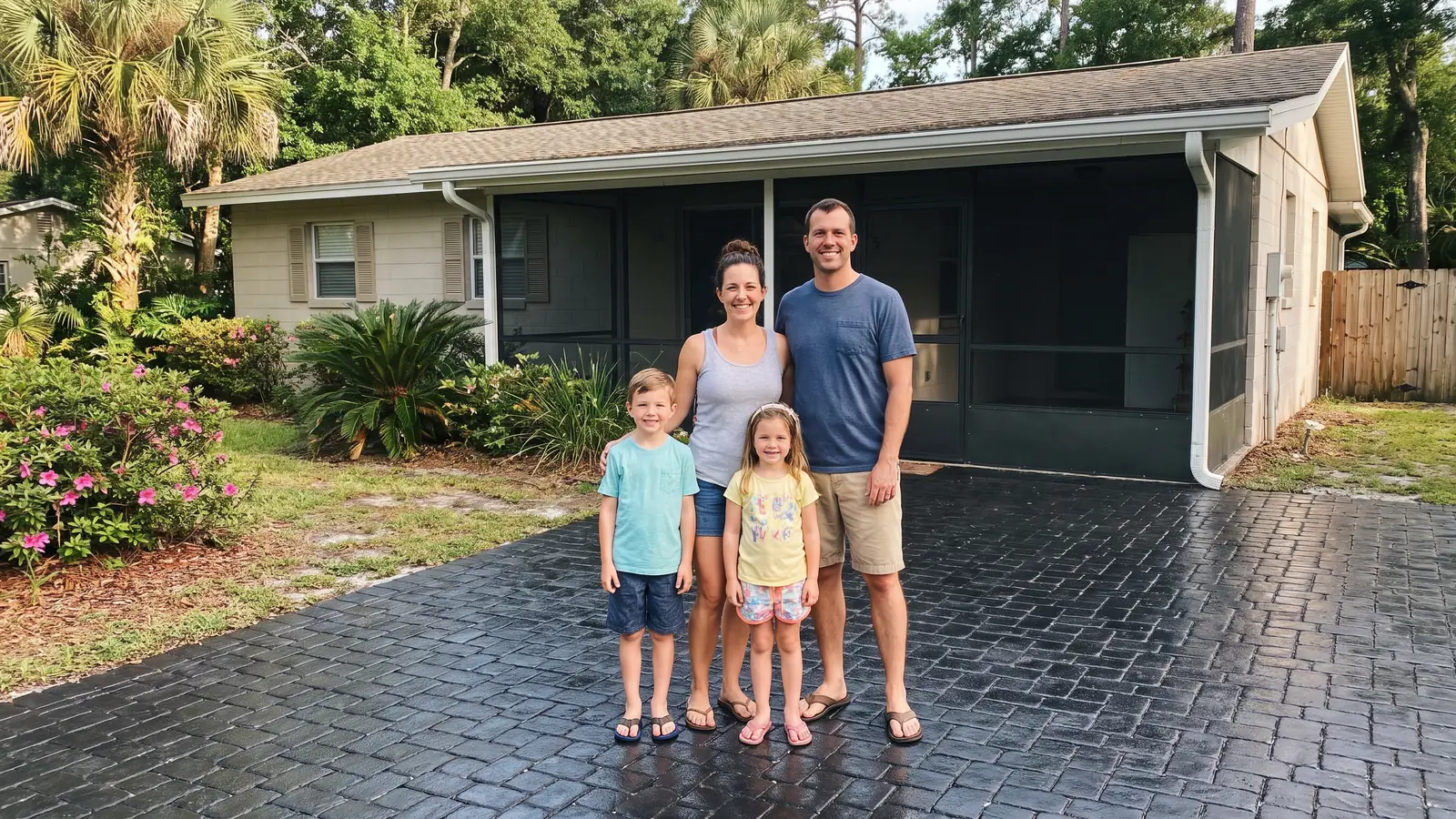
Paver sealing for Arlington homes
Paver Sealing in Arlington, FL
Live oaks drop stain and shade on Arlington drives, so call (904) 593-3709 for a free paver sealing estimate.
- Brings out deeper paver color
- Fresh joint sand helps lock pavers in place
- Gives weeds less room to grow
- Makes the surface easier to keep clean
- Free estimate, no obligation
Request a Free Estimate
Free, no obligation.
Fast, careful paver sealing in Arlington
Paver sealing reaches Arlington homes from the brick ranches near Jacksonville University to the older lots around Cesery Park. A local contractor washes the pavers, restores the sand and seals driveways, walkways and pool decks, and the estimate is free. Ask through book a free estimate and the reply lands within 1 business day, usually much sooner.
Picture the walk to your front door after a long summer under the oaks. Brown streaks, green edges and gaps in the joints make it look older than the house. A wash, new sand and a fresh coat clear the streaks and tighten the joints. To describe yours first, call (904) 593-3709.
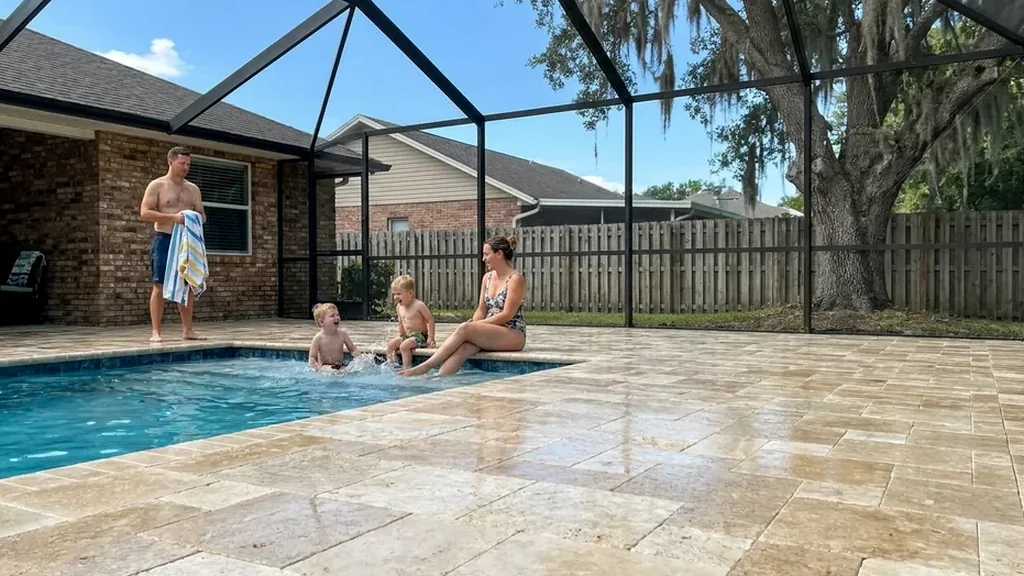
Why hire a local paver sealing contractor in Arlington?
Arlington has big oaks, long driveways and houses that date to the 1950s and 1960s, so its pavers face stains most other places do not. A local contractor knows to look for them, and you can book a free estimate to hear what that means for your lot.
Free look, price first
A contractor walks your Arlington driveway and walks at no charge, then states a price up front.
A range to compare
Published prices run $1.75 to $3.25 per square foot across the region for the wash, sand and sealer. Check each bid against that.
Stains handled first
Oil, rust and tire marks are pre-treated before the coat. Some deep stains may not come out completely, and you hear that up front.
Rental or home, same terms
About 44 percent of homes in this ZIP are rented. Owner or landlord, you set the date, and the estimate carries no obligation.
Get Your Free Estimate in Arlington
Tell us about your pavers in Arlington.
Free, no obligation
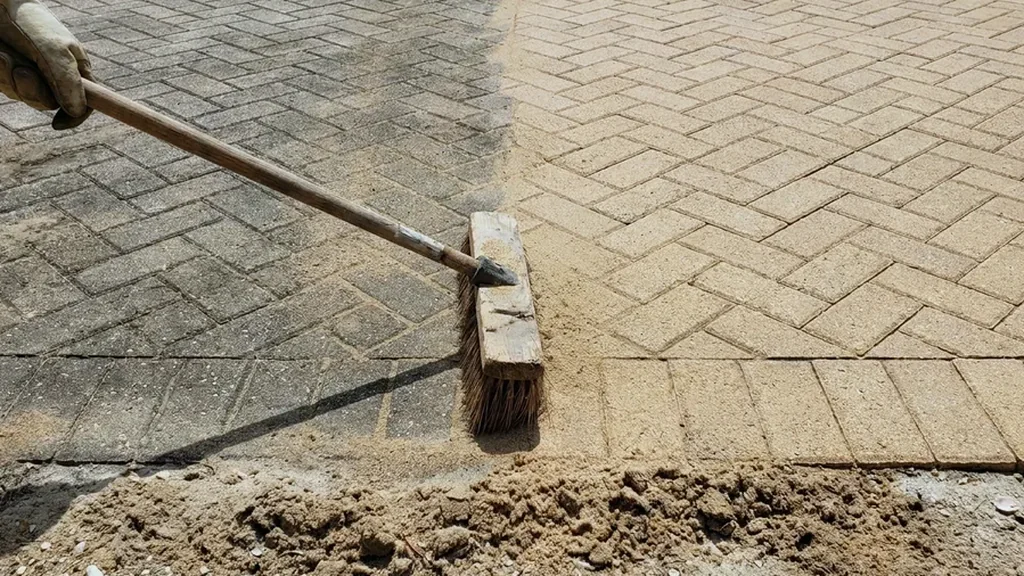
What paver problems show up most in Arlington?
Tannin stains under live oaks
Safe Touch, a Jacksonville company, says anything under a live oak canopy gets brown tannin stains on drives and walks. UF/IFAS says live oaks reach 60 to 80 feet tall with a spread of 60 to 120 feet. Tree Hill Nature Center in Arlington has a 300-year-old oak, so big canopies are part of the area. A coat on the pavers stops the next season from setting the stain deeper. That is why the wash and the coat belong together. Ask the contractor how many oak-shaded spots he sees on your lot.
Acorn marks and leaf litter on the drive
Water oak acorns leave stains on asphalt and concrete where they land, UF/IFAS says. Pavers are concrete too, so a driveway under oaks collects dark spots, most often right where the acorns land and sit. Leaves hold moisture against the surface, and a driveway that stays damp under them can look dark for days. Sweeping helps between visits, but the stains already set need a proper treatment first. Algae needs shade and wet to settle in, and a roof or tree overhead supplies both. Green growth at the edges of a walk is the usual first sign.
Sand lost even on high ground
A MetroJacksonville history says some of Arlington sits on high ground, unusual for North Florida, with excellent drainage for early residents. Good drainage is not the same as a full joint. The USDA's Ortega soil series, first described in Duval County, is a fine sand with rapid permeability. A Jacksonville company says a single summer storm can carry joint sand off a driveway, and once joints drop the pavers lose the support that locks them together. Weeds follow, and so do ants.
Roots under a long driveway
Safe Touch describes East Arlington as ranch homes, long drives, fences and pool decks. A long drive has a lot of ground for roots to cross. A Jacksonville sealing company says tree roots can lift a section of pavers, and sealing over a lifted spot only preserves the problem. Repairs come first, and then the sealer. A long drive may have more than one lifted spot, so the contractor walks the whole length. Fences and gates along the way may limit where equipment can go.
Old coats gone white
Arlingwood, in this ZIP, has homes dating from 1953 with a median build year of 1961. Houses that old have had several owners and several coats, and nobody kept the records. A Jacksonville cleaning company says pavers turn white usually from trapped moisture, failed sealer, over-application or poor prep. Failed sealer can often be stripped and redone, and water-based cannot go over solvent-based. Knowing which kind is on your pavers saves a wasted coat. A rental owner may not know, so the contractor tests the surface.
Do Arlington's brick ranch streets need a different kind of paver job?
Often yes, because those streets are older and the pavers on them tend to have been redone at least once. Arlingwood is mostly brick ranch, with some two-story homes and a median build year of 1961. River Forest is mostly 1950s and 1960s ranch construction of about 800 to 1,600 square feet. Tell the contractor your neighborhood when you book a free estimate.
Lake Lucina is another pocket with older homes. Developer William Cesery bought forty acres around 1950 for a subdivision named for a water hole, and homes there were built between 1951 and 1962. Cesery Park sits nearby. A walk laid in the 1950s may rest on settled ground, so call (904) 593-3709 and share what you know.
Realty profiles identify no homeowners association in River Forest or Arlingwood, so there may be no one to approve a sealer finish there. If yours has one, Florida Statute 720.3035 lets it review changes only as far as its declaration or published guidelines state. Check the rules, then book a free estimate. Matte keeps a mid-century brick front looking plain and calm.
What does paver sealing cost in Arlington?
Start with the published figure: $1.75 to $3.25 per square foot, which Northeast Florida companies list for cleaning, sand and sealer. A Jacksonville company says its process runs two days and that porosity and dirt affect the price. Brown stains and old coats push an Arlington job up the range. For a total on the pavers at your house, book a free estimate.
A fair bid names the area, the sealer and the prep. Long drives and pool decks add square feet, and a Jacksonville cost guide says larger projects get a better per-foot rate, while a locked gate or cramped side yard adds prep time. Call (904) 593-3709 to talk through what applies at your address.
| Paved area | Typical example | Clean, sand and seal |
|---|---|---|
| 300 sq ft | Small patio or walkway | $525 to $975 |
| 600 sq ft | Two car driveway | $1,050 to $1,950 |
| 1,000 sq ft | Large driveway or pool deck | $1,750 to $3,250 |
| 1,500 sq ft | Driveway plus pool deck | $2,625 to $4,875 |
Math based on the $1.75 to $3.25 per square foot that Northeast Florida paver companies publish. Your contractor sets the actual price after seeing the surface. Repairs, leveling and stripping failed sealer are usually extra.
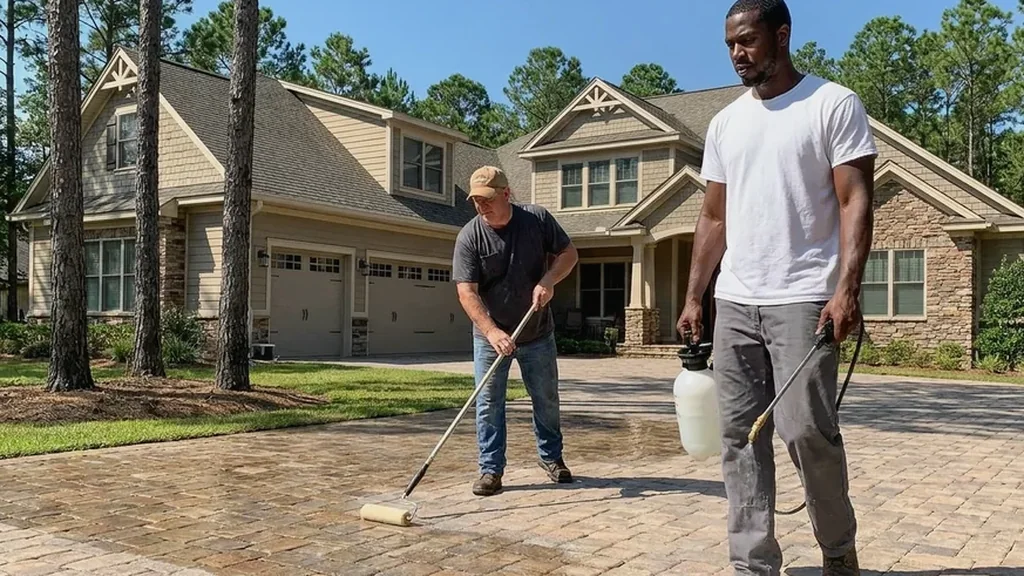
How does a paver sealing job work in Arlington?
Walk the lot and find the trouble
The contractor looks for oak stains, lifted corners and old sealer. Tree roots can lift a section, and sealing over it only preserves the problem. Those spots are repaired first. Rust, oil and tire marks are noted for pre-treatment. A long Arlington driveway may need more than one pass, so ask how the work is broken up. Bring up any pool deck or screened patio at this stage so it is priced with the rest.
Pre-treat and wash
Stains get treated before the wash, since many lighten a lot, though some deep ones will not fully come out. A trade supplier's guide advises staying under 3,000 PSI on standard concrete pavers, or the surface can be stripped. PaverGuard adds that harsh washing can loosen joints. The wash itself clears algae from the shaded edges and leaf stains from the open middle. Brown streaks that remain are noted, so you know what to expect.
Fill the joints with sand
Washing empties the joints, and a summer storm can carry sand off a driveway anyway, so the joints are refilled with sand before sealing. Sealing locks it in place, which limits disturbance from plants and insects. Full joints also help the pavers keep their grip on each other, which slows the creep that opens gaps. The sand is swept off the face of the pavers before the next step.
Let the pavers dry
Sealing waits for fully dry pavers, a Jacksonville paver page says, usually 24 to 48 hours after cleaning. A Surebond bulletin says most of its sealers need about 24 hours of dry surface after cleaning or rain. Oak shade slows drying, and so does a damp morning. A contractor who waits keeps the coat from turning white. If a storm arrives, the visit moves, and nothing is lost but a day. Ask how rescheduling works before you agree to a date.
Spray, roll and cure
Spray and back roll is the method a Trident Protects bulletin recommends for most sealers. Excess sealer left to dry can leave cloudy mottling. The coat then needs a day before cars, and walking on it is usually fine within a few hours. A wet look scuffs sooner than matte, so picture where the tires turn. Ask which applies to your product, and where the cars should wait in the meantime. A street spot for one night is usually enough.
Complete paver services in Arlington
In Arlington the stages run in this order: find the problem spots, pre-treat stains, wash, re-sand and seal. Dry time sits before the coat. Rushing any stage costs more later. To ask how long yours would take, call (904) 593-3709.
A driveway under oaks stains differently than a pool deck in the sun. East Arlington has long drives, fences and pool decks, and each wears in its own way. Mention what you have when you book a free estimate. The contractor can then quote each surface.
Choose between film-forming and penetrating sealers, and then between matte and wet look. A trade supplier says film-formers stabilize joint sand, while penetrating products leave the look unchanged. Wet look deepens color but shows scuffs sooner. Call (904) 593-3709 to see which suits a brick ranch with oaks out front.
Rain here comes mostly from May to September, often in brief, intense downpours. A firm date is less useful than a flexible window. To set up a window, book a free estimate.
Questions to ask before you hire
- Do you treat the weeds that grow up through the joints before sanding?
- What does the sealer do to water that pools on a low spot in my driveway?
- If rain moves the job, how do I find out and when is the new day?
- What is on the paperwork if the estimate changes once you see the old sealer up close?
- How long should I wait before driving or parking on the sealed surface?
- Does the quote include a second pass on spots that still look stained after the first wash?
- Will you cover my pool cage screens and the plants along the walkway?
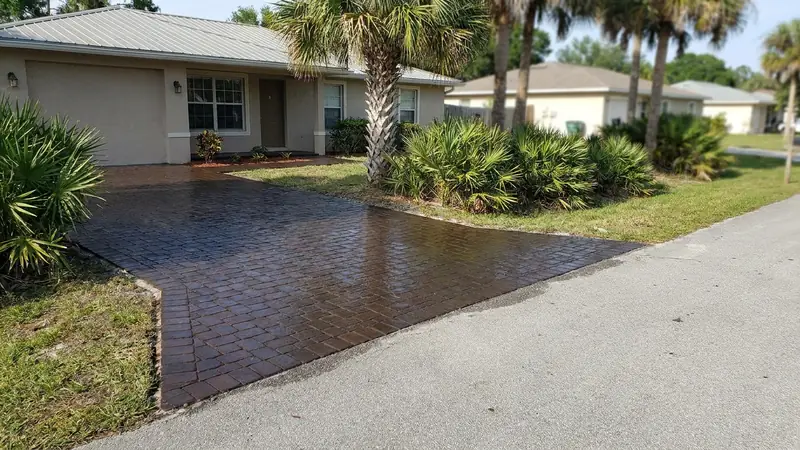
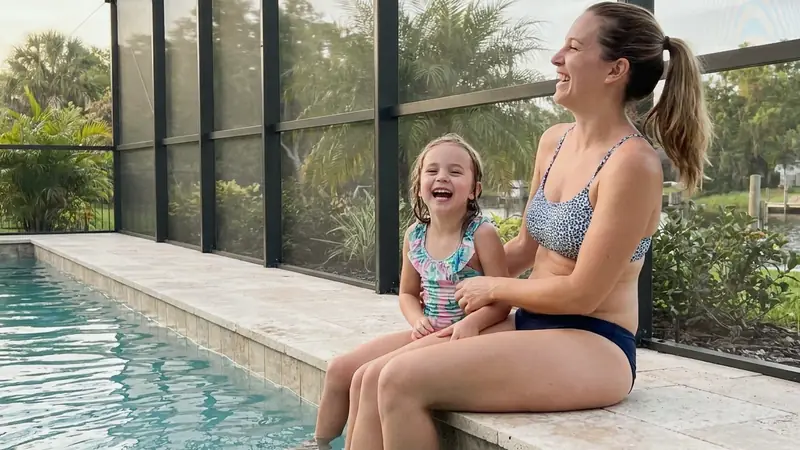
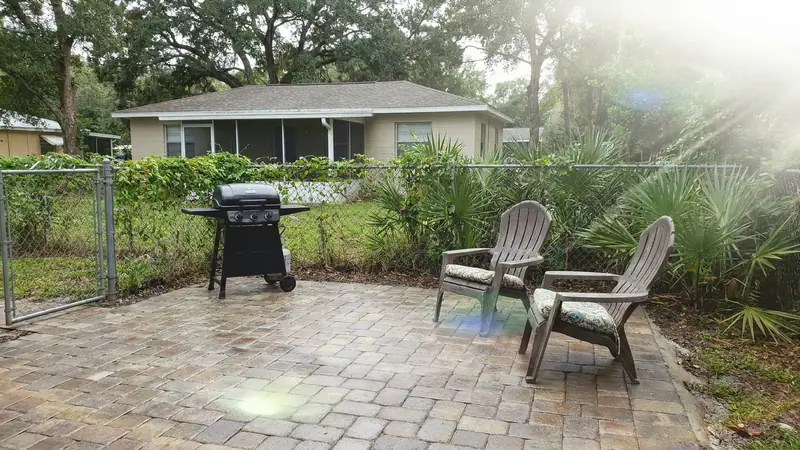
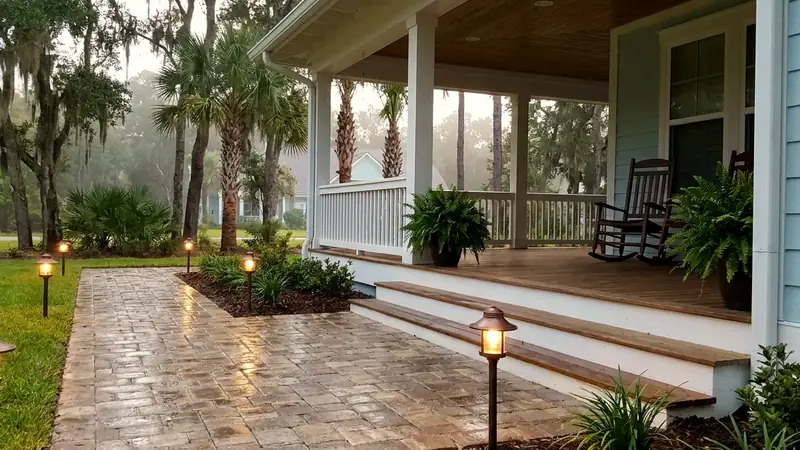
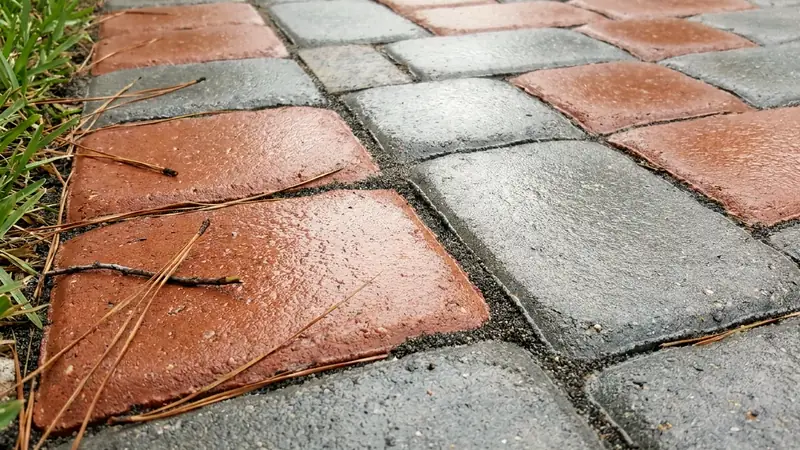
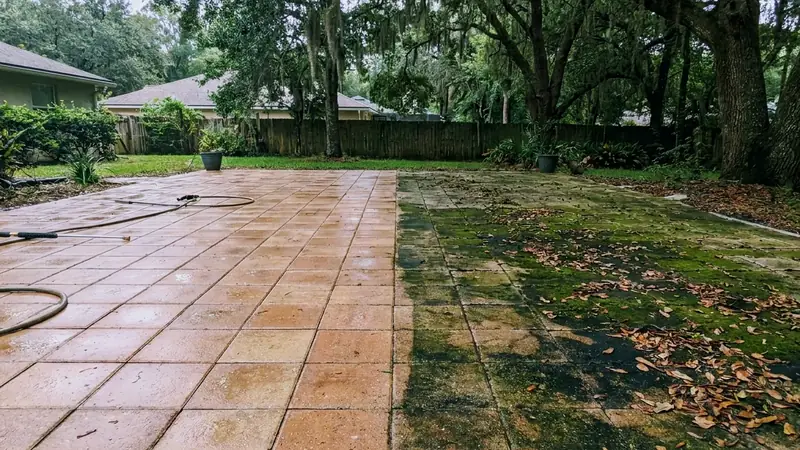
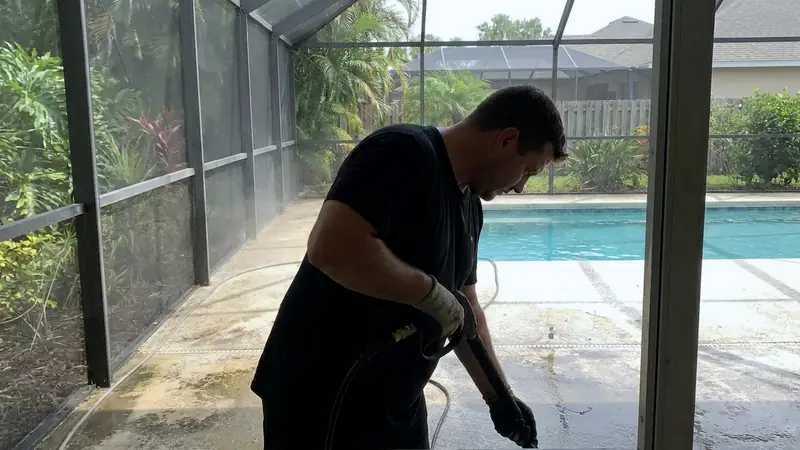
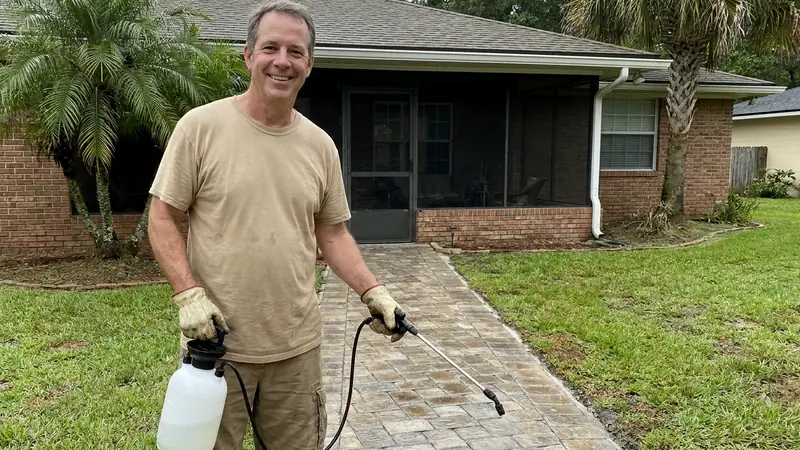
What do sealed pavers look like around Arlington?
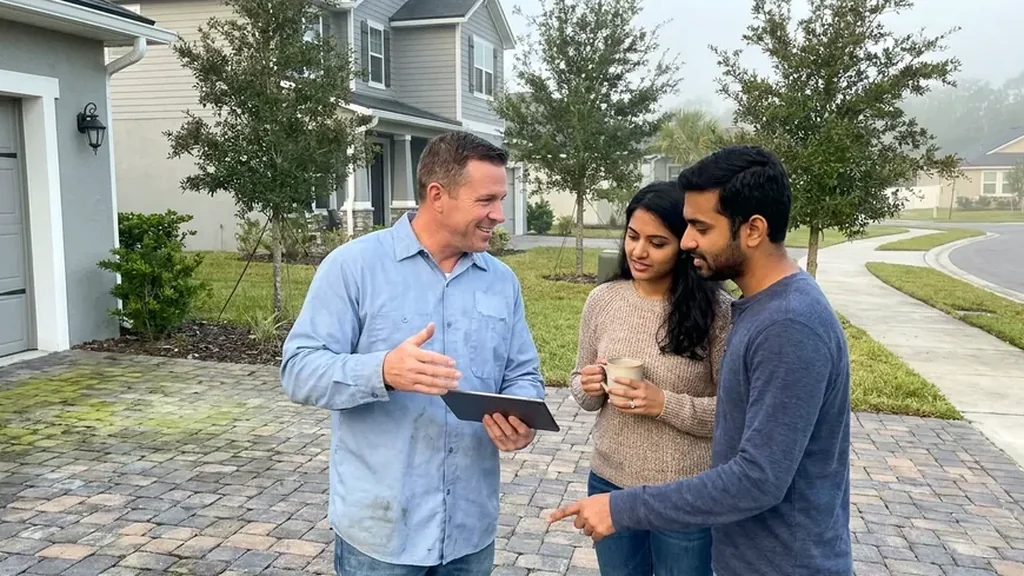
Why local matters in Arlington
A contractor who works Arlington has seen oak stains before and knows which products lift them, which saves a trial visit on your driveway. Out-of-area crews may treat brown streaks as plain dirt. To speak with a contractor who works east of the river, call (904) 593-3709.
Local knowledge also means knowing the ground. Parts of Arlington sit on high ground, and Pottsburg Creek, fed by rain and storm drains, runs through the south end, so drainage differs from block to block. Use book a free estimate to ask how the contractor would size up your lot.
Houses here come in many ages, from 1950s ranches to later infill. A local contractor can guess what sealers may already be on a driveway from the year the house was built. That matters because old products decide what can go on next. You can book a free estimate and share the year, with no obligation to hire.
How did Arlington grow into the neighborhood it is now?
After the Mathews Bridge opened in 1953, Arlington grew faster than any other area of Jacksonville for two decades. The Jaxson describes it as the first big post-war suburb in the city built around the car. Regency Square Mall went up in 1967 on a wide stretch of sand dunes. If you live near Regency or the bridge approach, book a free estimate.
Jacksonville University's 260-acre campus sits in Arlington, and the school bought land there in 1947. Tree Hill Nature Center at 7152 Lone Star Road opened as a city park in 1971, and its hill is described as the county's second-highest point at 36 feet. Norman Studios on Arlington Road is where Richard Norman made silent films after buying it in 1922. If you live near any of these landmarks, phone (904) 593-3709 and give your street.
Frequently Asked Questions
What does paver sealing cost per square foot in Arlington?
Northeast Florida companies publish $1.75 to $3.25 per square foot, covering the clean, sand and seal. Stains, failed old sealer and small jobs push a quote higher. Ask for the area of each surface to see how the total is built. That is the easiest way to compare two bids.
How much should I pay for paver sealing?
Pay what fits the published range of $1.75 to $3.25 per square foot, adjusted for prep. A Jacksonville cost guide says larger projects get a better per-foot rate and smaller ones cost more. A good bid names the area, the sealer and the steps. If one bid is far below the rest, ask what was left out.
Is there a pressure washing business in Florida that seals pavers?
Yes, many Northeast Florida companies wash and seal. A Jacksonville paver company says many offer sealing on the side and suggests asking which products they use. Ask for the brand, the finish and the prep steps in writing, and keep the paperwork for the next coat.
Is it good to seal pavers in Florida under oak trees?
Yes, it protects pavers from fading and stains. A Jacksonville company says sealed pavers rinse off instead of needing pressure washing. Under Arlington oaks, sealing also keeps the next season from locking a stain in.
How long do paver sealers last?
Two to five years between coats is the figure you will hear most. PaverGuard puts sunny driveways at about 18 to 24 months and shaded walks at 24 to 36. When water soaks in and stops beading, the coat has worn out.
Is there a downside to sealing pavers?
The trade-offs are upkeep and patience. A coat wears out and must be renewed, a wet look scuffs sooner than matte, and pavers have to be fully dry first. Done wrong, trapped moisture can turn it white, which a patient contractor avoids.
Will sealing remove oak stains?
Not by itself. The contractor pre-treats stains first, and a Jacksonville company says many lighten a lot, though some deep ones will not come out completely. Sealer then helps keep the next season from setting in.
Is sealing worth it on a rental property in Arlington?
It can be, since about 44 percent of homes in this ZIP are rented. Sealed pavers resist stains and hold joint sand, which means fewer repairs between tenants. Tell the contractor who will be home during the visit so access is easy. If a tenant parks on the drive, plan the day around it.
Why do my Arlington pavers get green at the edges?
Algae grows in shaded areas where there is moisture, such as under trees or patio roofs. Arlington's oaks and roof edges supply both. The contractor washes the green off, then refills the joints and seals so the surface starts clean.
Do I need to fix lifted pavers first?
Yes. A Jacksonville company says sealing over a lifted or sunken spot only preserves the problem, so repairs come first. Point out any corner that roots have raised, and any spot where water pools after rain. Those details help the contractor price repairs correctly.
Nearby areas we serve
Ready for a Free Estimate in Arlington?
Call (904) 593-3709 and tell us about your pavers.
Free, no obligation