
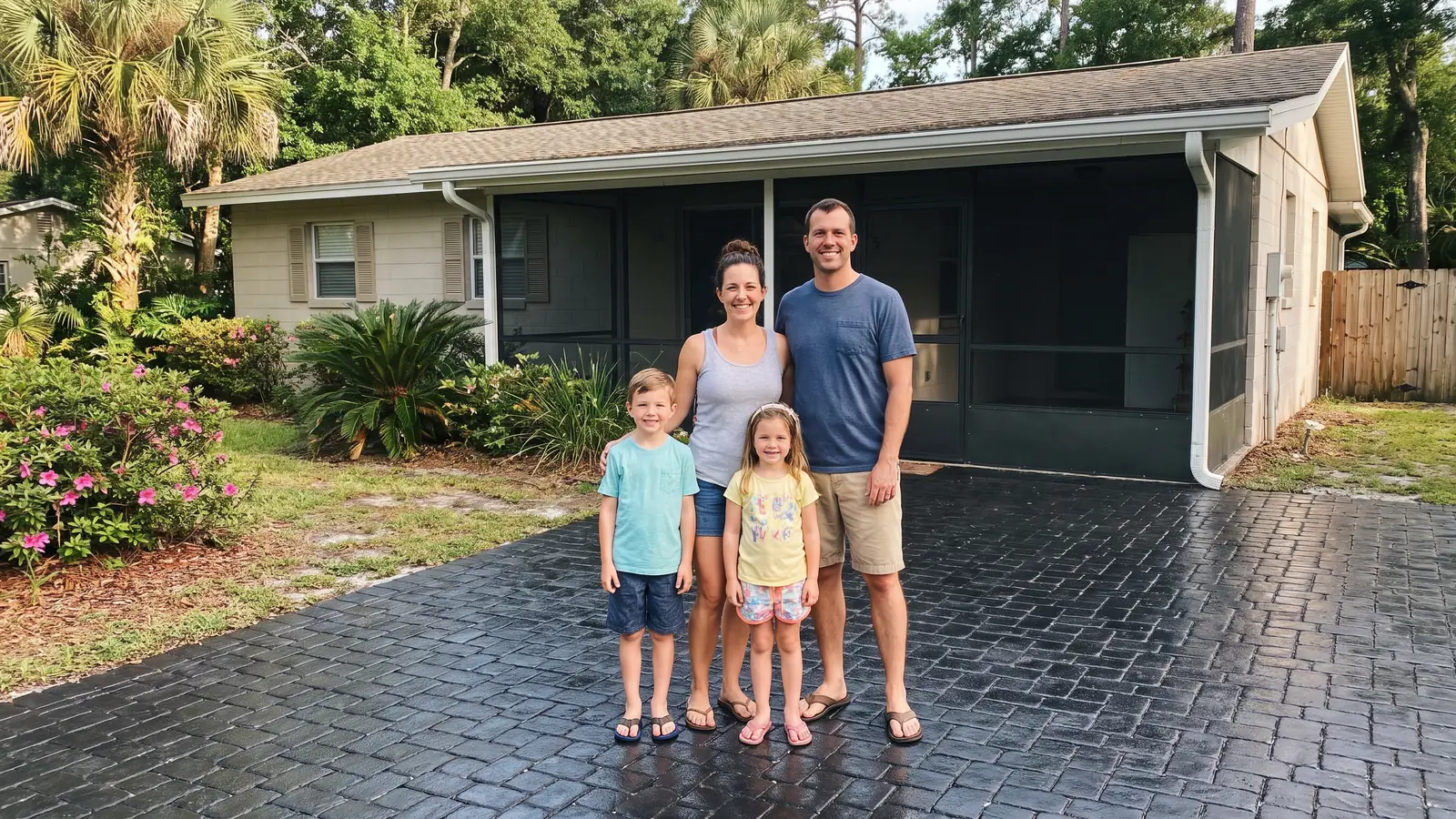
Paver sealing for Royal Terrace homes
Paver Sealing in Royal Terrace, FL
Royal Terrace pavers near West 45th Street can look new again, so call (904) 593-3709 for a free estimate.
- Brings out deeper paver color
- Fresh joint sand helps lock pavers in place
- Gives weeds less room to grow
- Makes the surface easier to keep clean
- Free estimate, no obligation
Request a Free Estimate
Free, no obligation.
Fast, careful paver sealing in Royal Terrace
Need paver sealing in Royal Terrace? A local contractor cleans, re-sands and seals driveways, front walks and patios, and the first look is free. Reach out with book a free estimate and a reply lands inside 1 business day, usually much sooner. Photos and a rough size are enough to get started.
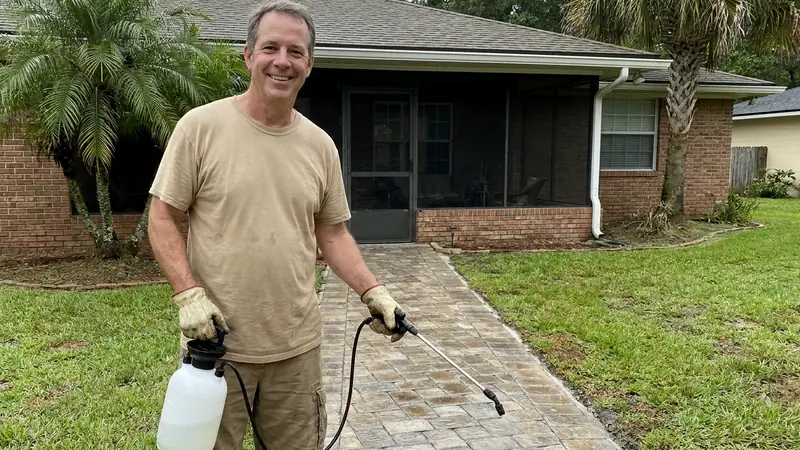
Think of the path to your door, streaked green with weeds along the edge. Washed, packed with fresh sand and sealed, it reads as one even color again. Prefer a talk? Call (904) 593-3709 and tell the contractor which spot bothers you most.
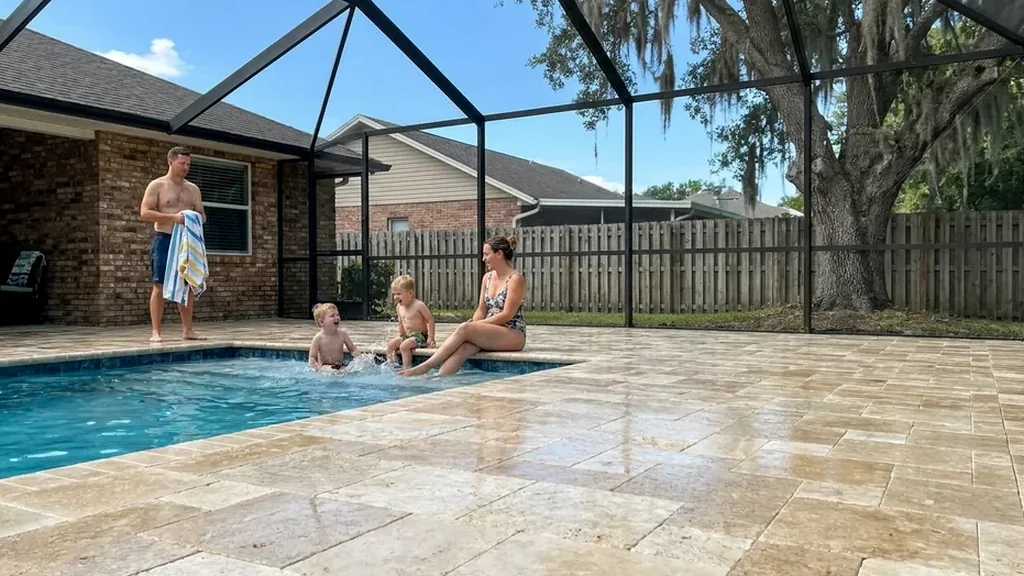
Why hire a local paver sealing contractor in Royal Terrace?
Royal Terrace homes sit on modest lots, so a small walkway or patio is often the whole job. A local paver contractor knows how to price work at that size, and you can book a free estimate to hear what yours would take.
Quote before work
You get a price in hand before anything starts. Looking at your Royal Terrace pavers costs nothing.
A fair yardstick
Jacksonville companies list $1.75 to $3.25 per square foot for this work. Use it to test any number you are given.
Short walks, short jobs
A front walk and a small patio are typical here. Ask early whether a minimum job size would apply.
A look you can choose
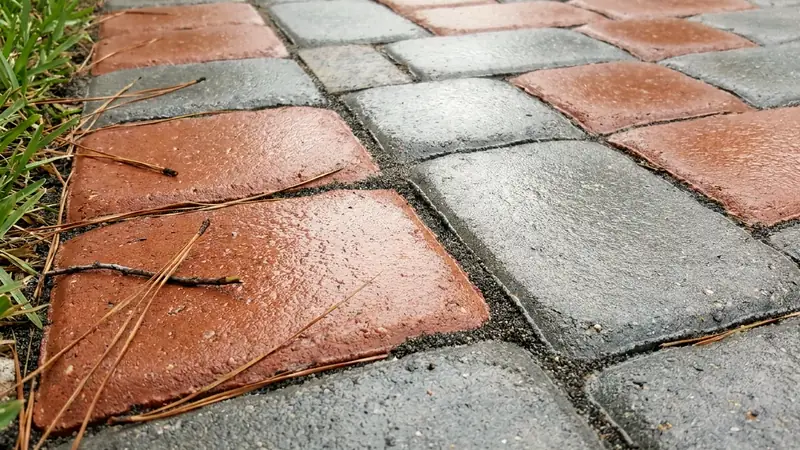
Matte hides wear on a busy driveway, while a wet look brings out color and shows scuffs sooner.
Get Your Free Estimate in Royal Terrace
Tell us about your pavers in Royal Terrace.
Free, no obligation
What paver problems show up most in Royal Terrace?
Sand that leaves the joints in summer storms
Rain totals about 52 inches a year in Jacksonville, and most of it falls from May to September in sudden, heavy bursts. Heavy rain can wash joint sand out of pavers. When joints run low, they widen and soil settles in, which means weeds have a place to root. In Royal Terrace, that shows up first along walkways with open edges. The sandy ground across Duval County drains quickly, so the loss is gradual and easy to miss until weeds show. Walkways that were never re-sanded after a wet summer are the usual spot. Chalk a line where the sand has dropped below the paver edge so the contractor can see how much is missing.
Roof water landing on the pavers
Pavers can settle where water from a roof or downspout keeps running onto them. A low spot then holds water and grows green film. Sealing over a dip only keeps it there, so a contractor should point out any sunken pavers before the work starts. Look at your walkway after the next storm and see where the water goes. The rebuilt street drains do not reach your yard, so roof runoff is yours to watch. A downspout that empties onto a walk is the classic cause. Walk the path during a rain and watch where the water pools, since a photo of that spot saves time.
A sealer nobody remembers
Homes here were mostly built from 1940 to 1969, so a paver patio was added later by some owner, and the product on it may be unknown. An oil-based coat has to be stripped first, according to a Jacksonville company that sees it on 10 to 20 percent of jobs. A water-based product will not bond over a solvent-based one, so someone has to identify the old coat. A patchy or peeling coat is a clue that something is already on the surface. Rented homes change hands, which means nobody may know what was used.
Haze on pavers that are fairly new
Habijax built 214 homes in Royal Terrace, and some owners have added pavers since. New concrete pavers can show a white mineral haze called efflorescence. A St. Augustine area company advises waiting about 60 to 90 days before sealing new pavers. Sealing too early can trap that moisture and haze under the coat. Ask what the pavers are and when they went in before anyone quotes a date. Ask the contractor to describe how new and old pavers will be treated differently.
Orange streaks from sprinkler water
UF/IFAS notes that iron is common in Florida well water and that sprinklers fed by it can leave orange stains. If your yard sprinkler sprays across the driveway, look for rust lines on the pavers. Treat those marks first, because a coat of sealer would seal them in. Aiming the heads away from the pavers helps keep new ones from forming. Stains that sit untreated get harder to lift the longer they stay.
What kinds of homes does paver sealing cover in Royal Terrace?
Most jobs here are on single-story family homes with a short driveway and a front walk. Homes for sale near Royal Terrace Addition, on Tuskegee Road, Meharry Avenue and West 44th Street, run from about 1,000 to 1,747 square feet. That is a good fit for a contractor who likes tidy jobs. Pavers on lots like that are small, so book a free estimate and give the contractor your rough measurements.
NeighborhoodScout says many Royal Terrace homes were built between 1940 and 1969, with more added from 1970 to 1999. Habijax built 214 new homes here, and 72 older homes were rehabilitated through a city repair program. Newer and older paver work can sit a few doors apart, so call (904) 593-3709 and say roughly when your home was built.
About three in four homes in ZIP 32209 are single-family, and renters live in 53 percent of occupied homes, though those numbers cover the whole ZIP. Tenants need the owner's go-ahead before pavers are sealed. Owners can ask for the estimate directly, so book a free estimate.
What does paver sealing cost in Royal Terrace?
The going rate in Jacksonville runs $1.75 to $3.25 a square foot for a wash, new sand and a coat of sealer. A local cost guide notes that small jobs cost more per foot, since prep time stays about the same no matter the size. That matters in Royal Terrace, where a front walk and small patio are common, so ask for the total and the rate. To start, book a free estimate and it costs nothing to ask.
Some companies set a minimum job size, which can matter on a small patio. Stripping failed sealer and replacing sand that summer storms took out add cost too, and strip-and-reseal runs higher than a fresh coat. Call (904) 593-3709 and talk through which of these could touch your yard.
| Paved area | Typical example | Clean, sand and seal |
|---|---|---|
| 300 sq ft | Small patio or walkway | $525 to $975 |
| 600 sq ft | Two car driveway | $1,050 to $1,950 |
| 1,000 sq ft | Large driveway or pool deck | $1,750 to $3,250 |
| 1,500 sq ft | Driveway plus pool deck | $2,625 to $4,875 |
Math based on the $1.75 to $3.25 per square foot that Northeast Florida paver companies publish. Your contractor sets the actual price after seeing the surface. Repairs, leveling and stripping failed sealer are usually extra.
How does a paver sealing job work in Royal Terrace?
Look at the pavers and the water
The contractor walks your Royal Terrace lot and checks how rain moves off the roof and across the pavers. Sunken spots get noted, since sealing over a dip keeps the dip. Ask about any older coat. If one is there, its type decides which sealer can follow it. Photos of the pavers help a lot when you first ask for the estimate. A tape measure on each paved area gives a firm square footage.
Wash away the green and the grime
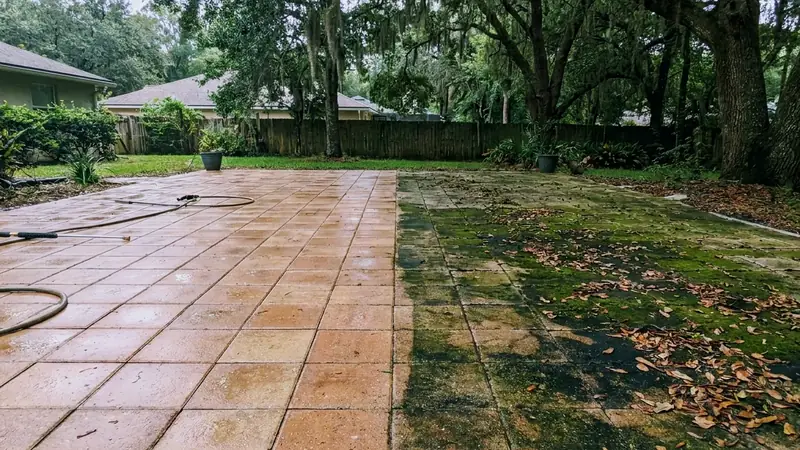
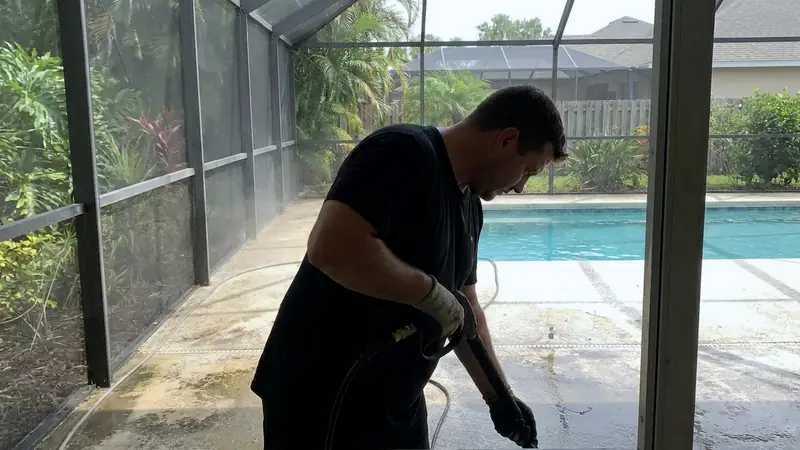
Washing comes first. Pressure that is too high can loosen joints or wear the surface, so the contractor sets it for pavers. Rust marks and white haze get treated at this stage. Everything must be clean, because sealer locks in whatever sits under it. Water that runs off a washed paver should look clear before the next step begins. Shaded corners often need a second pass.
Sweeping new sand into the joints
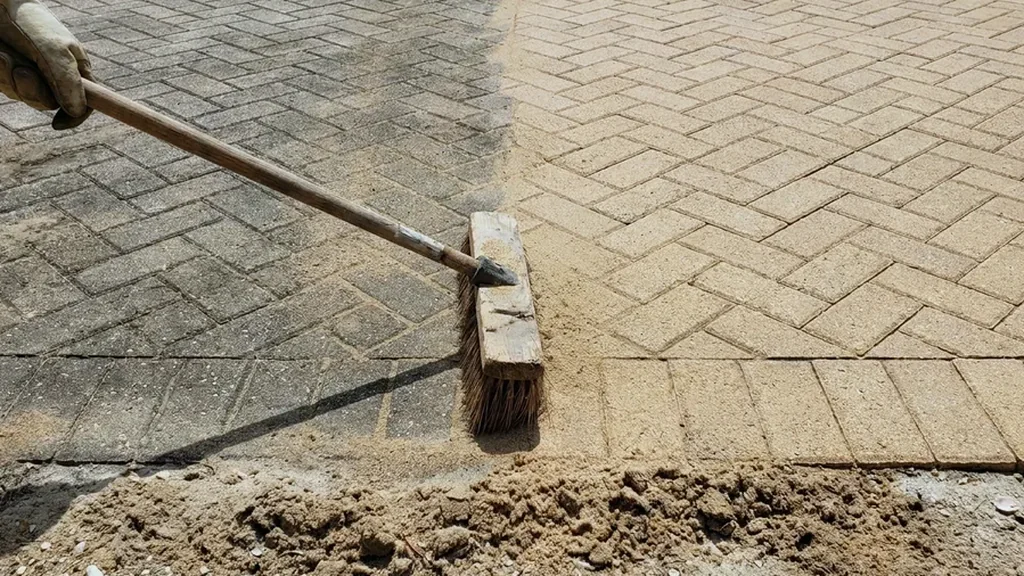
Washing pulls sand out of the joints. The contractor sweeps in fresh sand and tops up any low joints before sealing. One Jacksonville company says sealed joint sand stays put and discourages weeds and ants, so this step is the base for everything that follows. Tight or low joints get extra passes so the sand packs in. Sand color options help the joints blend in.
Let the surface dry out
Sealer needs a dry surface. One Jacksonville company advises against sealing a damp surface or just ahead of a forecast downpour. In summer, that can mean waiting out a week of afternoon storms. A shaded side yard may need an extra day or two. Companies commonly note that most sealers need about a day of dry weather to cure. Rain delays are normal and the contractor can reschedule. A shaded side yard often dries last, so the contractor may seal it on a later day.
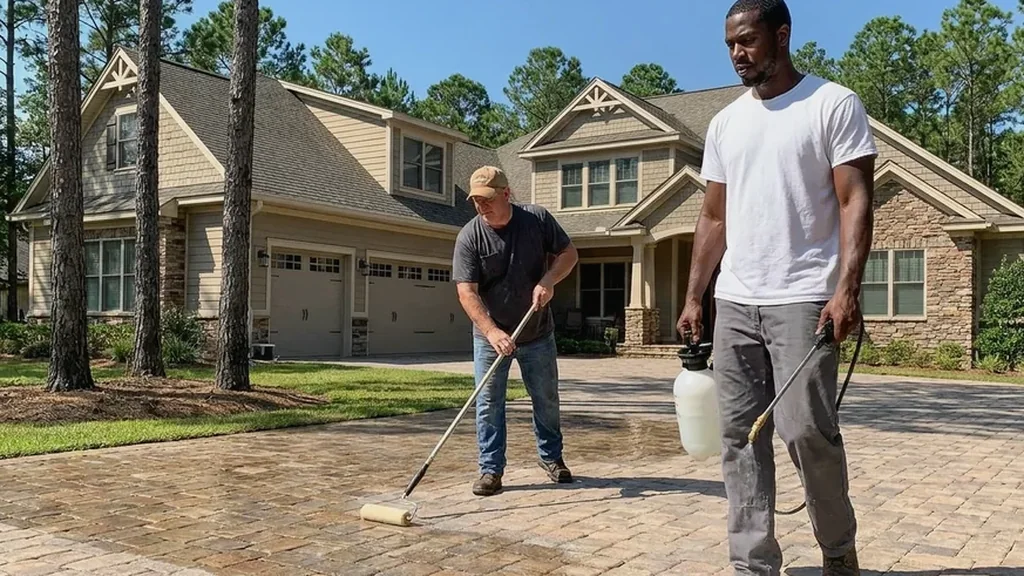
Apply the sealer and keep off it
Last, the sealer goes down in the finish you picked. Matte leaves the paver looking natural, and a wet look deepens the color while showing scuffs sooner. A Jacksonville sealing company allows foot traffic after 2 to 4 hours and asks that cars wait a full day. Ask whether the coat is water-based or solvent-based and write the product name down for next time. Keep sprinklers off the pavers for the first day.
Complete paver services in Royal Terrace
Four stages make up a Royal Terrace job: washing, new sand, drying time and sealer. Green film and dirt come off first, and sealer goes last so nothing gets trapped. Call (904) 593-3709 for a time frame on each stage.
Front walks, short drives and back patios are the usual surfaces. Tires and oil drips mark driveways, while walks beneath a tree stay damp and green. A small patio can be one visit. List your surfaces when you book a free estimate.
Two sealer families exist. Film-forming acrylics sit on top and hold joint sand, while penetrating products soak in and leave the look alone. A past owner may have used one you cannot name. Call (904) 593-3709 to sort out the pick.
Afternoon storms are common in summer, so build in slack. Quotes of two to five years between coats are normal, and sunny driveways may run 18 to 24 months. Spring and fall tend to be steadiest. To choose a date, book a free estimate.
Questions to ask before you hire
- What is on the paperwork if the estimate changes once you see the old sealer up close?
- Do you treat the weeds that grow up through the joints before sanding?
- How do you tell whether my pavers need a reseal or a full strip first?
- Will you need my outdoor water spigot, or do you bring your own water?
- What does the sealer do to water that pools on a low spot in my driveway?
- Will the sealer change the color of my pavers, and can I see a test patch first?
- If rain moves the job, how do I find out and when is the new day?
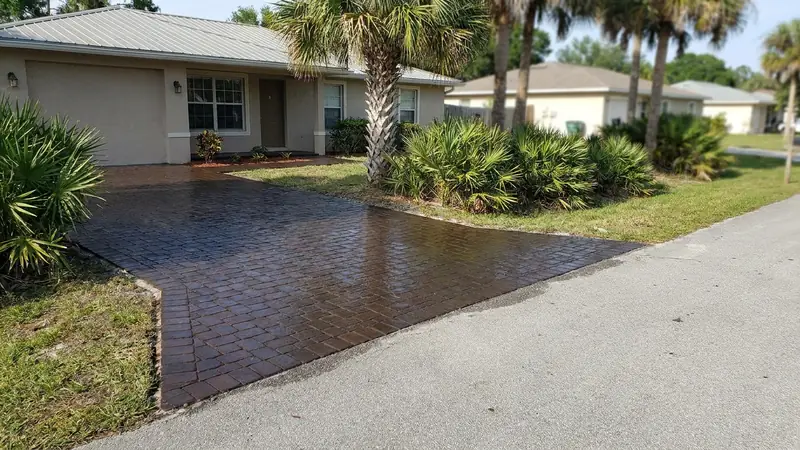
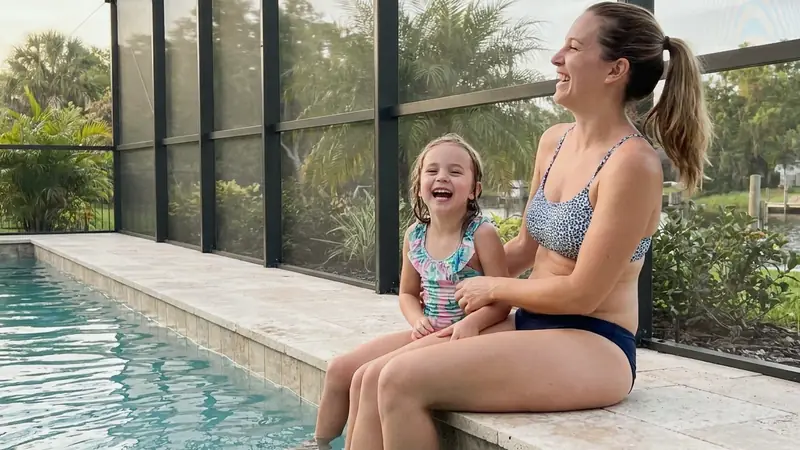
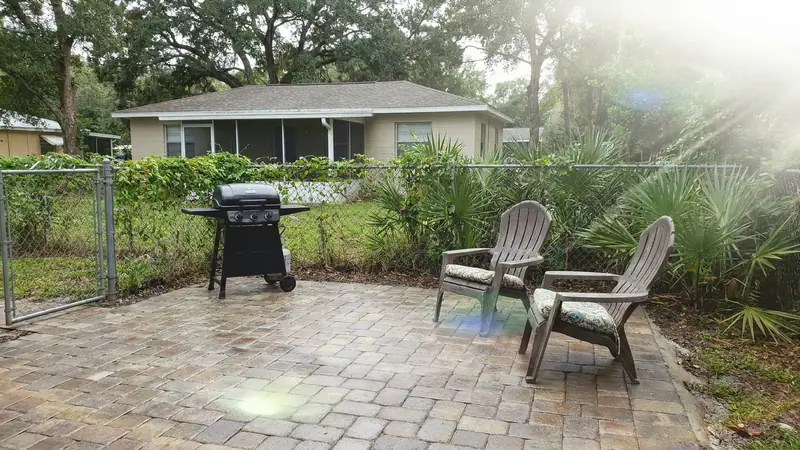
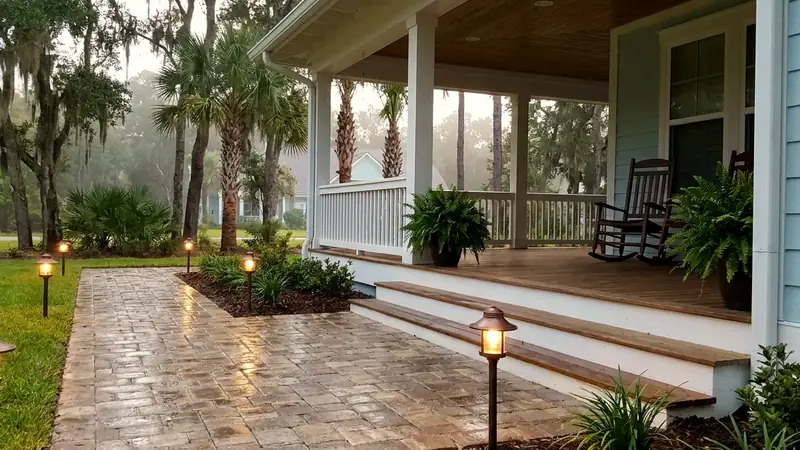
What do sealed pavers look like around Royal Terrace?
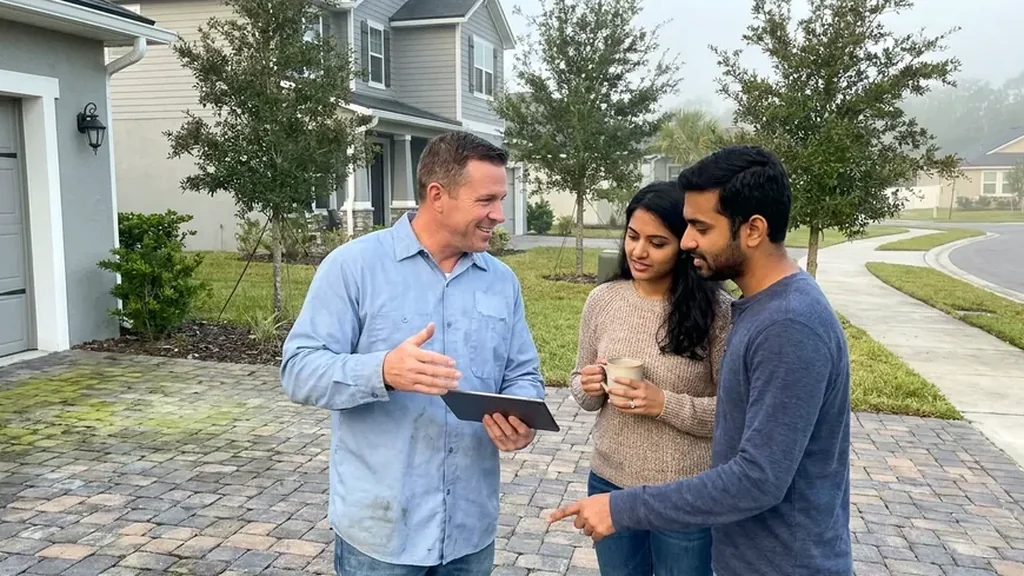
Why local matters in Royal Terrace
North Jacksonville streets like these were rebuilt in a long city project that added drains, curbs and sidewalks. A contractor who knows that history can read where your roof water goes. Most homes are older than their pavers, so ask about the coat underneath. To speak with a local contractor, call (904) 593-3709.
Summer is the wet season, with rain concentrated from May to September. Dry windows are short in August, and a contractor who lives nearby knows to keep a few days open. Out-of-town crews often book one day and lose it. Ask how dates are handled when you book a free estimate.
Small homes do not mean small care. A local contractor gives a front walk the same attention as a three-car drive, with the total in writing and no pressure to add surfaces. Photos of your pavers help, so send a few when you book a free estimate, with no obligation to hire anyone.
What should a Royal Terrace homeowner know about the area?
Royal Terrace is one of the neighborhoods in north Jacksonville, and Wikipedia says that part of the city has no single agreed boundary. The Mid-Westside community nearby includes Durkeeville and Grand Park, which were woods and farms through most of the 1800s. West 45th Street has Northwestern Middle School and Legends Elementary School. For a quote near any of them, book a free estimate.
Several streets carry the names of historically Black colleges, such as Tuskegee Road and Morehouse Road. Moncrief Road began as a toll road to Moncrief Park, a tourist spot in the 1870s with a racetrack that opened in 1909. The Point, where Moncrief and Myrtle Avenue meet, was a streetcar stop. If your pavers are near the Moncrief area, call (904) 593-3709.
Frequently Asked Questions
How much does it cost to seal pavers per square foot in Royal Terrace?
Expect $1.75 to $3.25 per square foot for the wash, sand and sealer, which is the range local companies tend to publish. Small jobs often cost more per square foot, because prep time does not shrink with the area. Ask for the total and the rate in writing. Prices on this page are the published Jacksonville range, not a quote for your lot. Quotes should name the area and the rate.
Is it good to seal pavers in Royal Terrace?
Yes, it is worth doing for most homes. A sealed surface holds joint sand, which keeps weeds down, and it slows sun fade. Sealing is not a repair, so sunken pavers still need to be fixed first.
How long do paver sealers last in Royal Terrace?
The usual quote is two to five years before a recoat. A sunny driveway can need attention sooner than a shaded walk, and water that soaks in rather than beading is the signal.
Why is paver sealing so expensive in Royal Terrace?
Because the sealer is the small part of the bill. A Jacksonville company reports about 2 to 3 hours of prep for each hour spent sealing, and a failed coat adds a strip step. That prep is what makes the coat last.
Can a Royal Terrace renter get pavers sealed?
Yes, once the owner agrees. Renters live in about 53 percent of occupied homes in ZIP 32209, so a tenant can hand the quote to the landlord. The estimate itself is free.
Do small patios cost more per square foot?
Usually, yes. A local cost guide notes small jobs run higher per foot, because setup and prep barely shrink. Some companies also have a minimum job size, so ask before you book. A short front walk is a fair example.
How soon can I walk or park on newly sealed pavers?
One Jacksonville sealing company says 2 to 4 hours before foot traffic and 24 hours before cars. Exact times shift with the product and the weather. Have the contractor confirm the figure for the sealer going on yours. Keep sprinklers and pets off the surface until then.
Should I wait to seal new pavers at my Royal Terrace home?
Yes. A St. Augustine area company says new pavers should wait about 60 to 90 days so trapped moisture can escape. White haze can also show up in that time and has to be treated before a sealer goes on. Sealing too early traps both.
What is the difference between matte and wet look sealer?
Matte keeps the natural look of the paver. A wet look deepens the color and adds shine, but it shows scuffs sooner. One Jacksonville company offers four finishes, so ask which ones the contractor carries.
Does sealing stop weeds in paver joints?
It helps a great deal. Weeds usually start where joints have lost sand and let soil in, and a sealer that stabilizes the joint sand keeps that from happening. Weeds can still blow in and root in dirt on top.
Can pressure washing alone fix my pavers?
It fixes the look for a few months, according to one Jacksonville paver company. High pressure can also loosen joints and dislodge sand, so the sand has to be replaced before sealing.
How do I know if my pavers need sealing again?
Check how water behaves on them. A Jacksonville paver company says that when water stops beading and soaks in fast, the coat is spent. Dull color, bare spots and weeds returning to the joints are other signs worth a free look.
Nearby areas we serve
Ready for a Free Estimate in Royal Terrace?
Call (904) 593-3709 and tell us about your pavers.
Free, no obligation