
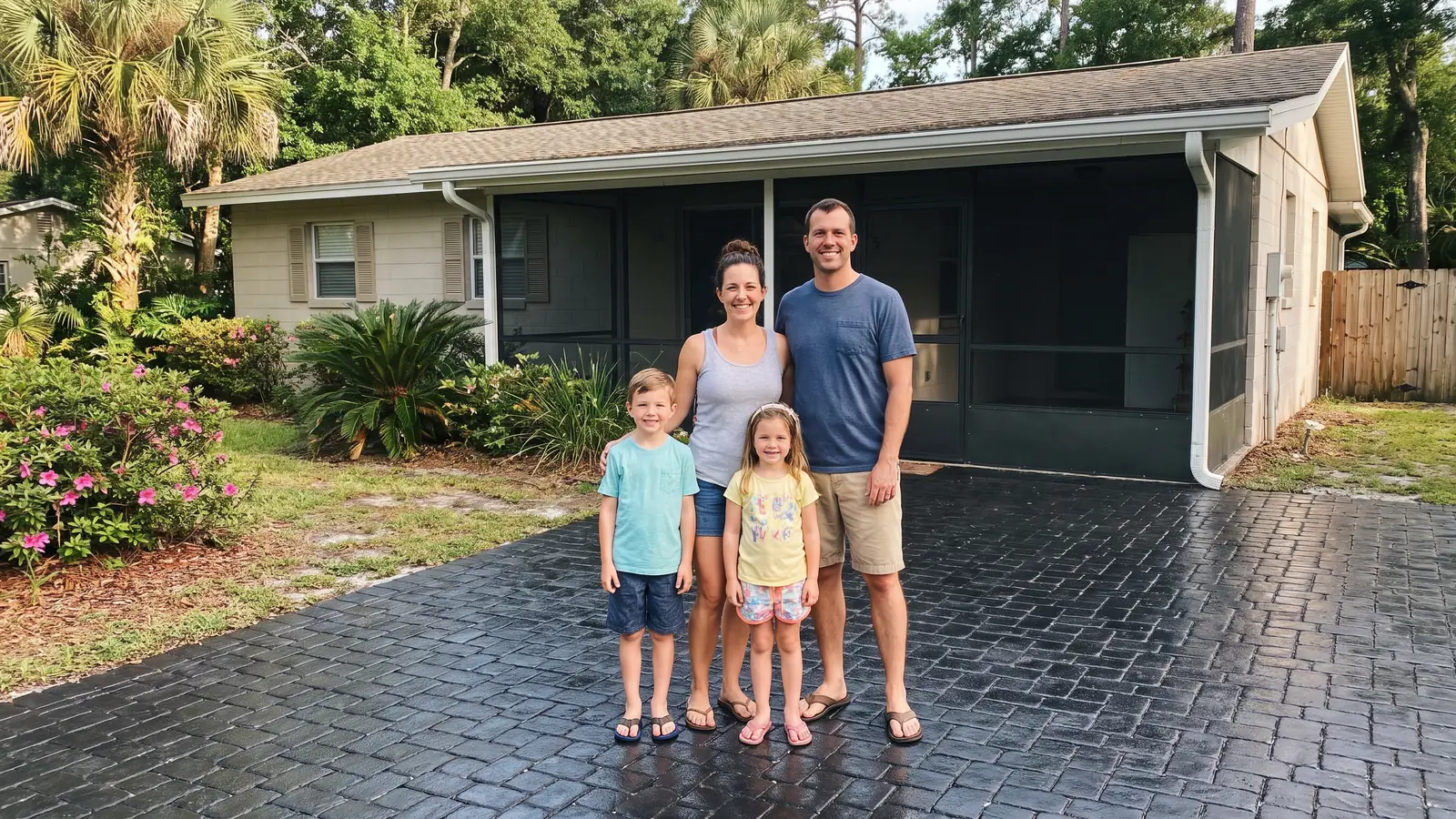
Paver sealing for Riverside homes
Paver Sealing in Riverside, FL
Riverside pavers under the oaks can come back clean and even, so call (904) 593-3709 for a free estimate.
- Brings out deeper paver color
- Fresh joint sand helps lock pavers in place
- Gives weeds less room to grow
- Makes the surface easier to keep clean
- Free estimate, no obligation
Request a Free Estimate
Free, no obligation.
Fast, careful paver sealing in Riverside
Riverside homeowners can book paver sealing with a free estimate, and a local contractor does the washing, the joint sand and the sealer. Message through book a free estimate and an answer comes within 1 business day, usually much sooner. Mention your street, since bungalows and bigger houses need different care.
Picture a gray-green film on your pavers, dark acorn spots and moss along the edges. A wash, new sand and a fresh coat bring one clean color back, and fallen leaves rinse off more easily. To describe your driveway or courtyard, call (904) 593-3709.
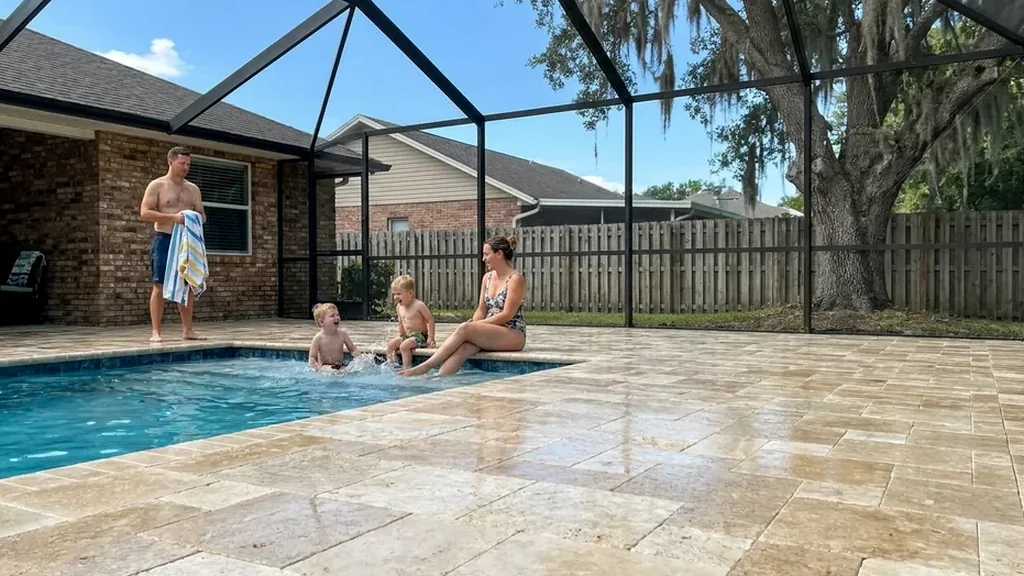
Why hire a local paver sealing contractor in Riverside?
Riverside has tall oaks, historic district rules and houses of many ages, and each one changes how a paver job should go. A local contractor expects that, so book a free estimate and ask how it applies to your address.
Your oaks are considered
Shade, acorns and leaf drop change the wash. The contractor plans around the canopy over your Riverside yard.
Know the going rate
Around $1.75 to $3.25 a square foot is what Jacksonville companies publish for a clean, sand and seal.
Gentle near old materials
Brick, stone and wood siding get careful rinse water. Mention what your home is made of.
Pick the sheen
A bungalow porch or Prairie School front suits matte. A wet look glows more, but scuffs show sooner.
Get Your Free Estimate in Riverside
Tell us about your pavers in Riverside.
Free, no obligation
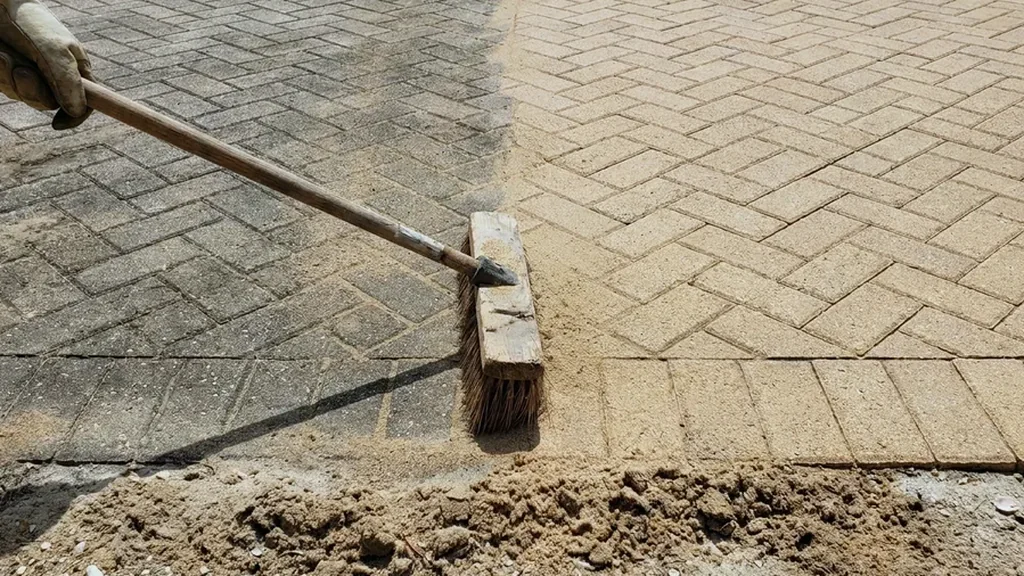
What paver problems show up most in Riverside?
Acorn stains and a steady layer of leaves
UF/IFAS describes water oak acorns as prolific, and says they leave stains on asphalt and concrete. It also says live oaks can spread 60 to 120 feet, which is wide enough to cover a whole yard. Leaves that sit on damp pavers keep them wet. If your Riverside walk lies under a big canopy, expect dark spots in the same places each fall. Acorns and leaves can pile into the joints, so the sand there gets a coat of organic mess. The wash has to reach those joints, not just the top of each paver. Raking leaves off weekly keeps the surface from staying wet. Raking is cheaper than rewashing, which makes a fall cleanup worthwhile.
Green film where the shade stays damp
Green algae grows in shaded spots with moisture, such as the north side of a house or under trees and patio roofs. The Royal Horticultural Society adds that algae grows faster in shade with poor air circulation. Riverside is known for moss-draped oaks along its streets. Pavers there can turn slick and green, which means the wash has to come before any sealer. The film is thin at first, which makes it easy to ignore. By late summer it can cover a shady walk from end to end, and it is slippery when wet. A wash lifts the film, though only sealer slows it coming back. The bungalow porches along the older streets add yet more shade.
Joint sand lost to hard summer rain
The city sees roughly 52 inches of rain a year, mostly May through September in brief, heavy bursts. Heavy rain can wash sand out of paver joints. A widened joint collects soil, and weeds take root there. A Jacksonville sealing company calls unsealed joint sand that washes out a main reason pavers fail. In the sandy ground of Duval County, joints drain fast and refill slowly, so a thin joint in spring becomes an open gap by the next fall. Topping up sand each spring is cheap compared with relaying a walk. Joints beside stone steps and curbing drain quickest, so they show the gap first.
Low spots that sealer would keep
The same company says storm water that gets under pavers can wear away the base. That leaves sunken or tilted pavers, especially near downspouts and low corners. Sealing over a dip only preserves it. A contractor should point out any low sections before the sealing starts, so you can decide on repairs first. Walks near porches are common trouble spots, since water from a roof edge lands in the same place every storm. Tell the contractor where you see a dip, and mark it with chalk if you like. Where a brick edging has settled, the pavers beside it usually follow.
Coats left by earlier owners
Houses first appeared in Riverside in the 1870s, and pavers here were added by many owners over many decades. No one may remember the product used. A water-based product cannot cover a solvent-based one, and one Jacksonville firm strips an oil-based coat first on roughly 10 to 20 percent of its jobs. A flaky or cloudy coat is a clue worth mentioning. Ask a past owner or neighbor what was used, and keep any receipt you find. Earlier owners' coats are why a quote may shift after the first look. A courtyard behind a larger house may have been paved by a different owner than the front walk.
Do historic district rules affect paver sealing in Riverside?
They can, because Riverside Avondale became a local historic district in 1998. The city requires a Certificate of Appropriateness for exterior work in a historic district, and its own page lists site work such as driveways as an example. Check your address on the city's Land Development Map, and book a free estimate once you know what applies.
For small projects, the neighborhood preservation group suggests that owners or contractors contact historic planning staff directly. Many are handled by staff with no public hearing. The city page does not name sealing, so ask before you set a date, and call (904) 593-3709 if you want a contractor's view of what the work involves.
Riverside holds modest bungalows set back from the river and larger houses built closer to it after the 1901 fire. The wider Riverside Avondale district shows 15 architectural styles. ZIP 32205 is about 45 percent renter-occupied, so a tenant may need the owner's approval first. Tell the contractor your house style when you book a free estimate.
What does paver sealing cost in Riverside?
Where a Riverside job lands inside the published $1.75 to $3.25 per square foot range depends on shade growth, old sealer and lost joint sand. Failed sealer must come off first, and strip-and-reseal costs more. For a number on your pavers, book a free estimate.
Small jobs run higher per foot, and tight side yards, locked gates and nearby plants add prep time, per a Jacksonville cost guide. A walled courtyard behind an older house fits that description. City approval, if your address needs it, is a separate step from the quote. Call (904) 593-3709 and ask which of these fits your lot.
| Paved area | Typical example | Clean, sand and seal |
|---|---|---|
| 300 sq ft | Small patio or walkway | $525 to $975 |
| 600 sq ft | Two car driveway | $1,050 to $1,950 |
| 1,000 sq ft | Large driveway or pool deck | $1,750 to $3,250 |
| 1,500 sq ft | Driveway plus pool deck | $2,625 to $4,875 |
Math based on the $1.75 to $3.25 per square foot that Northeast Florida paver companies publish. Your contractor sets the actual price after seeing the surface. Repairs, leveling and stripping failed sealer are usually extra.
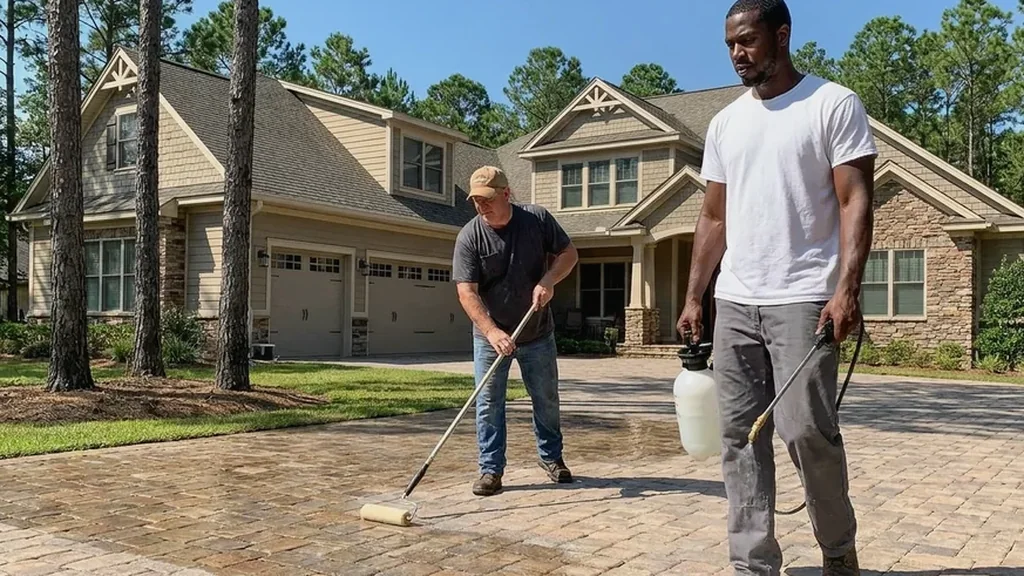
How does a paver sealing job work in Riverside?
Walk the lot and read the old coat
The contractor looks at where oak shade falls, how water leaves the pavers and whether an old sealer is present. If one is, its type decides what can follow, because the water-based kind will not bond over the solvent-based kind. Sunken pavers get flagged now. You can also check your address on the city map for historic rules. Ten minutes with a tape measure gives a firm square footage for the quote. Writing down shade and oak cover now keeps the quote honest. Walking the lot after a rain shows where water stands better than any guess.
Wash off acorn marks and green film
Cleaning removes leaf stain, moss, algae and weeds from the joints. A trade supplier warns that pressure above 3,000 PSI on standard concrete pavers risks stripping the surface, so the contractor keeps it moderate. Water near wood siding and old mortar is kept to a minimum. A stain trapped beneath sealer is there to stay. Any rust or oil spots are noted so they can be treated while the surface is open. Gentle rinsing near old mortar is part of the plan. Mossy brick edging gets a softer pass than the pavers around it.
Fill the joints with fresh sand
Washing takes sand out, so new sand goes in before sealing. The contractor sweeps it into every joint and tops up the low ones. Sealed joint sand holds the pavers steady and discourages weeds. In Riverside, shaded corners where moss grew often need the most sand. This step is also the cheapest insurance against weeds, since the sealer stabilizes the sand once it dries. Fresh sand is what lets the sealer hold the pavers still. Joints beside old curbing and steps are often the emptiest. Ask the contractor to show you a sample joint before sealing starts.
Give shaded pavers time to dry
Sealer needs a dry surface. One local page puts the safe wait at 24 to 48 hours of drying after a cleaning, and says to seal only a fully dry surface. Oak shade slows that down. A careful contractor checks the forecast and holds off rather than coat damp pavers. A courtyard walled in by older brick may hold moisture even longer. Patience here saves a cloudy finish later. Drying is the step most often rushed, and the one most likely to cloud a coat.
Spray, back-roll and keep off it
One trade bulletin recommends spraying and then back-rolling for most sealers, and warns that pooled sealer can dry cloudy. The contractor applies your chosen finish evenly. Walking on it is usually fine within hours, while cars should wait about a day. Get the product name and finish in writing, which lets a later coat match. A short list of do-nots for the first day is worth asking for. Sealer that dries in the open is easy, so shaded courtyards get closer watching.
Complete paver services in Riverside
Four steps shape a Riverside job: wash, sand, dry and seal. Sealer traps what lies beneath it, so the order never changes. One trade bulletin recommends spraying and then back-rolling most products. Call (904) 593-3709 to hear how long each step takes on your lot.
Bungalow driveways, brick porch walks, courtyards behind bigger houses and pool decks all count. Under a big oak, a walk stays damp and collects acorns in the same places each fall. Tell the contractor about your surfaces and the shade over them when you book a free estimate.
An acrylic forms a film that holds the sand, and a penetrating sealer soaks in with no change to the look. Gloss levels run from matte to high gloss, and matte keeps the natural color. Find out what is on your pavers now, then book a free estimate.
Rain peaks from May to September, and big oaks leave patios wet after storms. Spring and fall often bring the steadiest sealing weather, one Jacksonville company says. A shady courtyard may need an extra drying day. Call (904) 593-3709 to plan around the forecast.
Questions to ask before you hire
- What does the sealer do to water that pools on a low spot in my driveway?
- Do you treat the weeds that grow up through the joints before sanding?
- Can you work around a gate, a dog run or a car I cannot move that day?
- How hard do you spray, so the joints and the paver surface are not damaged?
- How do you tell whether my pavers need a reseal or a full strip first?
- What is on the paperwork if the estimate changes once you see the old sealer up close?
- How long should I wait before driving or parking on the sealed surface?
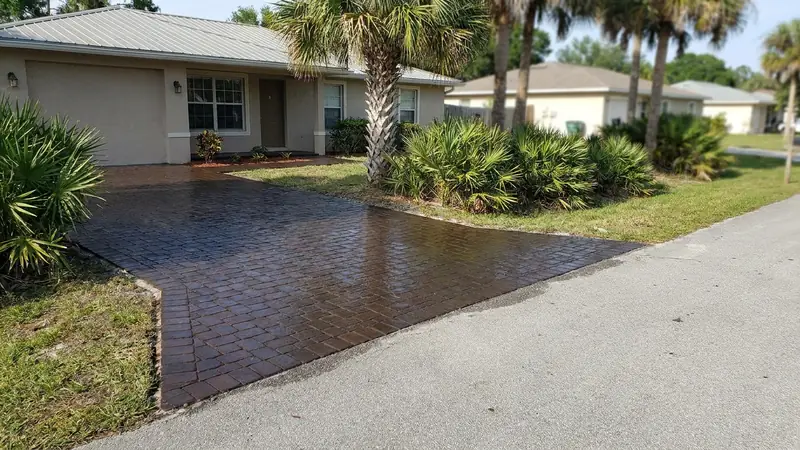
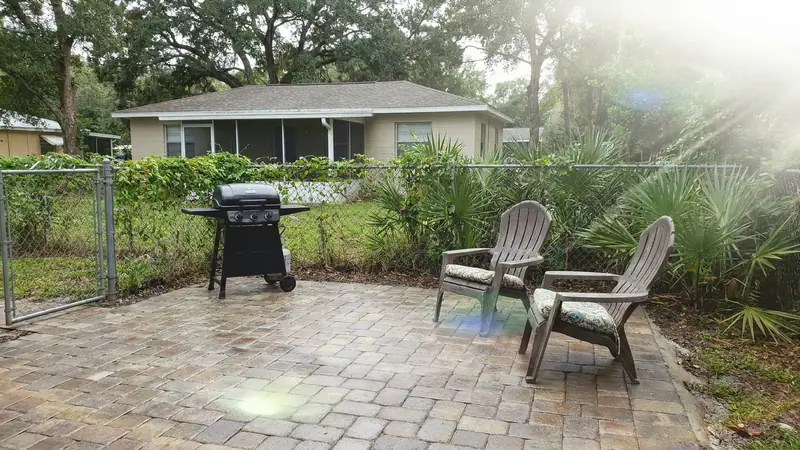
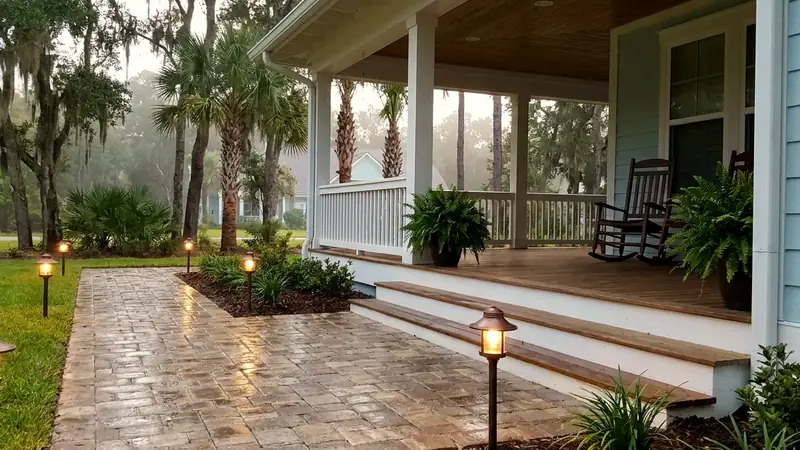
What do sealed pavers look like around Riverside?
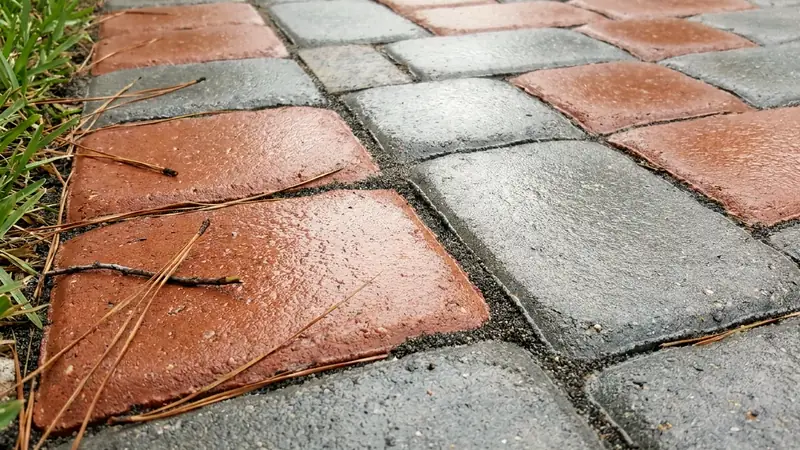
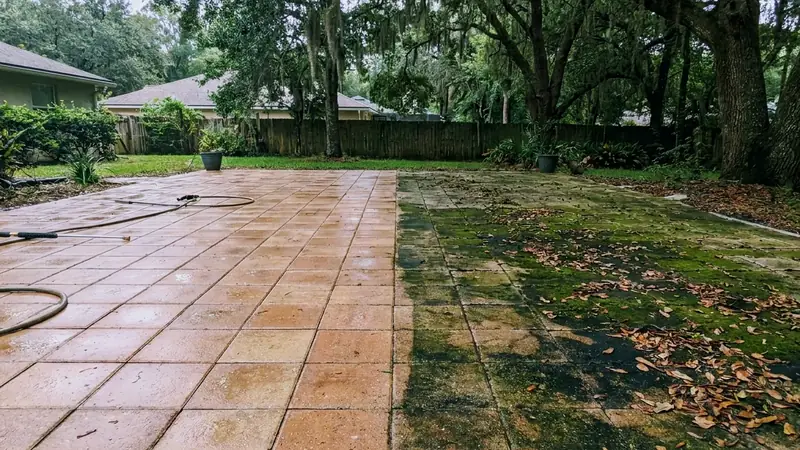
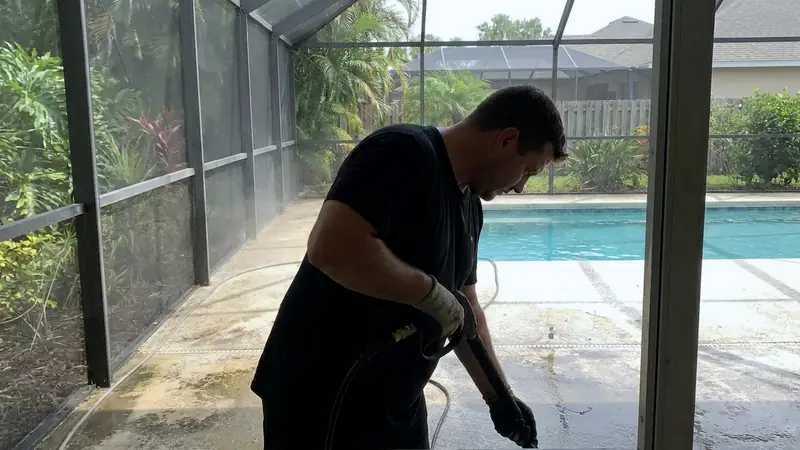
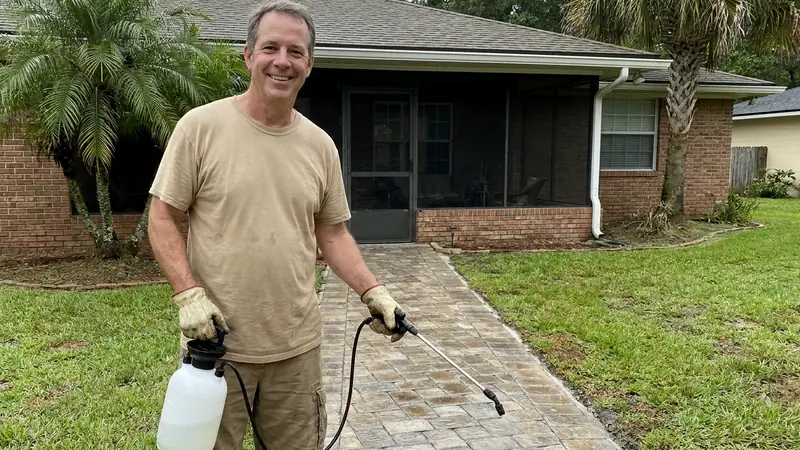
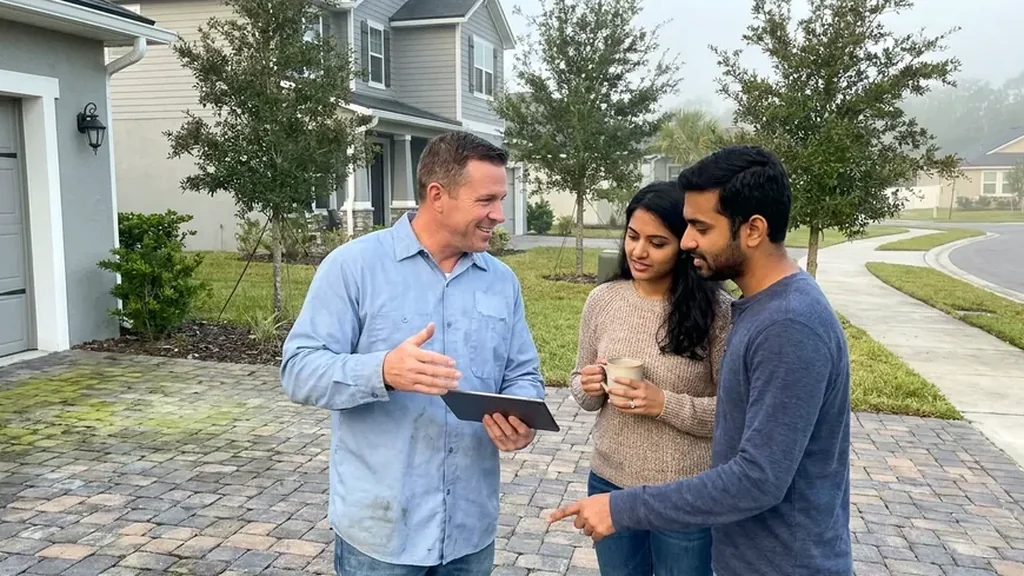
Why local matters in Riverside
Oaks come first in Riverside. Leaf drop, acorns and shade decide how long the wash takes and how soon green comes back. A contractor from an open-sun subdivision may price it too low. To reach a local contractor, call (904) 593-3709.
Riverside Avondale has been a local historic district since 1998, and driveways sit on the city's list of site work. A contractor used to the rules saves you a surprise at the permit stage. Ask what the contractor has seen on your street when you book a free estimate.
Bungalows and brick call for a gentle hand. Wood siding and old mortar should not take a blast of rinse water, and a contractor who works here keeps spray where it belongs. Send photos of the front of your house when you book a free estimate, with no obligation.
Does knowing Riverside's history help a paver contractor?
It does, since the age of the neighborhood tells you what your pavers sit beside. Riverside was platted in 1868 on Dell's Bluff land, and Riverside Park was developed by 1895. Memorial Park came later, built by the Olmsted firm in 1919. If your home is near one of these parks, book a free estimate.
Five Points is named for the meeting of Park, Lomax and Margaret Streets, and Willow Branch Park began development in 1916. The Cummer Museum of Art and Gardens is in Riverside, which also sits between Interstate 10 on the north and Fishweir Creek on the south. If you live near any of these places, call (904) 593-3709.
Frequently Asked Questions
How much does it cost to seal pavers per square foot in Riverside?
Budget $1.75 to $3.25 per square foot for the clean, sand and seal that Jacksonville companies commonly list. Shade growth and failed old sealer push a Riverside job higher in that range. Request the area and the rate on paper. The estimate itself is free. Oak canopy and old sealer are the two things most likely to move a Riverside quote.
Is it good to seal pavers in Riverside?
Usually yes. Sealer steadies the joint sand, so weeds and ants have less room, and it slows fading from the sun. Under Riverside oaks, a sealed surface also rinses clean more easily. Courtyards sheltered by tall oaks see the benefit most.
Is power washing safe for pavers in Riverside?
Only at the right pressure. A Jacksonville company warns that high-pressure washing can loosen joints, wear the surface and push sand out. A trade supplier warns that above 3,000 PSI risks stripping standard concrete pavers. A contractor sets the pressure and then replaces lost sand. Moss-draped oak streets like Riverside make a gentle approach especially worthwhile.
Why is paver sealing so expensive in Riverside?
Mostly the prep. One Jacksonville paver company spends 2 to 3 hours getting ready for every hour of sealing, which covers the wash, new sand and drying. Oak shade can add washing time too. A courtyard behind a larger house is a common example.
Do I need city approval to seal pavers in Riverside?
It depends on your address. Inside a historic district the city asks for a Certificate of Appropriateness on exterior work, and it counts driveways as site work. The city page does not name sealing, so check the Land Development Map and ask historic planning staff first. A short call to staff can sort out whether your work counts as a small project.
What can I do about acorn stains on my Riverside pavers?
Ask for the stains to be treated during the wash. UF/IFAS says water oak acorns stain concrete and asphalt where they fall. Sealer locks in what sits under it, so the pavers need to be clean before any coat goes on. Rinse the stained area with plain water until the contractor arrives, and leave the rest to them.
How long do paver sealers last in Riverside?
Expect quotes of two to five years before the next coat. Sun-baked drives wear sooner than shaded walks, and a splash of water that soaks in fast tells you the coat is spent.
How soon after cleaning can Riverside pavers be sealed?
Once they are fully dry, typically 24 to 48 hours after cleaning, one Jacksonville page says. Shade under oaks can stretch that out. Sealer on a damp surface traps moisture, so the contractor may wait. Fully dry means dry to the touch and in the joints.
Do contractors spray or roll paver sealer?
Often both. Spray and back roll is the method a trade bulletin recommends for most products. The back-rolling works the product into the joints and evens it out, and extra sealer left to dry can leave cloudy spots.
Will sealing keep weeds out of my Riverside pavers?
Mostly, yes. Joints that keep their sand leave weeds little soil to grip, and sealer helps the sand stay. Seeds blown onto dirt that settles on top can still sprout, so an occasional sweep helps.
What finish should I pick for a Riverside driveway?
It depends on the look you want. Wet look deepens the color while scuffs show sooner, and matte keeps the appearance natural. One Jacksonville company offers four finishes, so ask which ones your contractor carries and see a sample.
Is sealed paver slippery around a Riverside pool?
It can be when wet, which is why some companies add a slip-resistant additive to sealer on pool decks. One St. Augustine company does this. If you have a pool, ask the contractor whether an additive is used and what finish goes with it.
Nearby areas we serve
Ready for a Free Estimate in Riverside?
Call (904) 593-3709 and tell us about your pavers.
Free, no obligation