
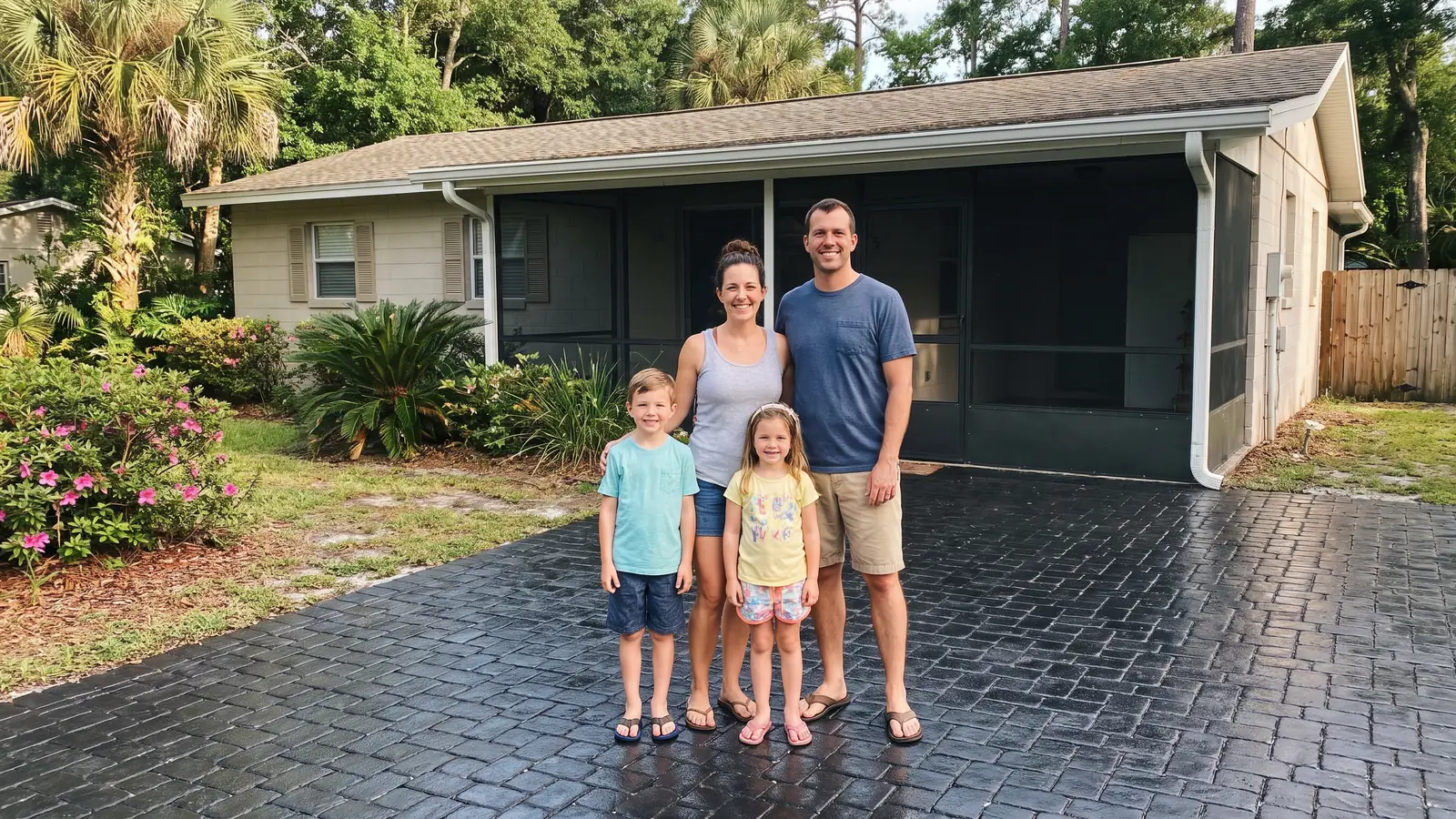
Paver sealing for Arlington Hills homes
Paver Sealing in Arlington Hills, FL
Turning tires loosen joint sand on Arlington Hills driveways, and a call to (904) 593-3709 starts a free estimate.
- Brings out deeper paver color
- Fresh joint sand helps lock pavers in place
- Gives weeds less room to grow
- Makes the surface easier to keep clean
- Free estimate, no obligation
Request a Free Estimate
Free, no obligation.
Fast, careful paver sealing in Arlington Hills
Arlington Hills homeowners can book paver sealing on streets from Layton Road and Cesery Boulevard to the ones named for plants. A local contractor cleans the surface, tops up the joint sand and seals driveways, walkways and patios, and the estimate is free. Make your request with book a free estimate, and the answer comes within 1 business day, usually much sooner.
Maybe your driveway has a worn track where the tires turn, and the joints there have gone empty. Weeds have moved in, and the color has faded to a flat gray. A wash, fresh sand and a new coat put the pavers back to one even tone. To describe your driveway first, call (904) 593-3709.
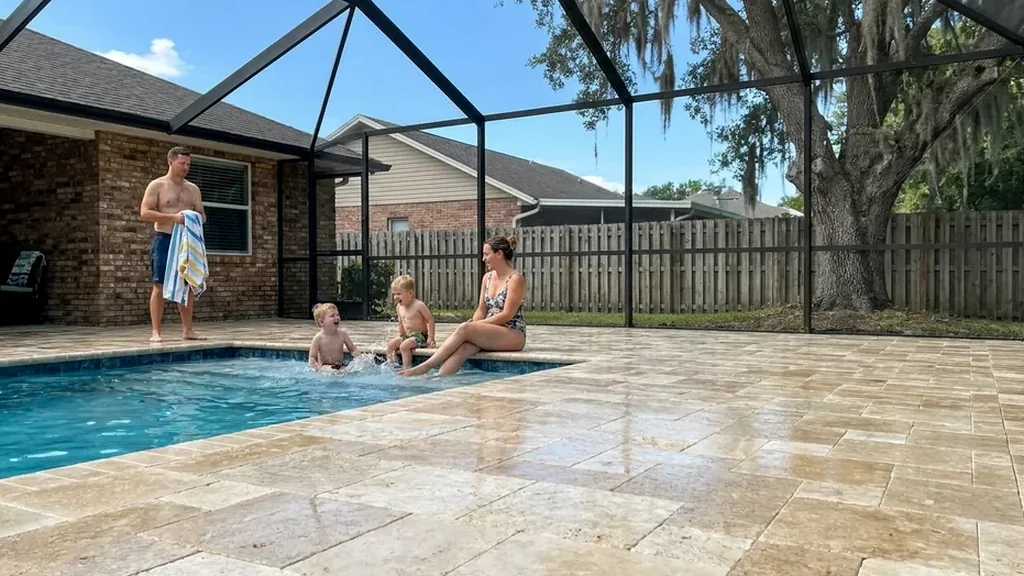
Why hire a local paver sealing contractor in Arlington Hills?
Arlington Hills dates to 1954, so its driveways have seen decades of cars, roots and river air. A local contractor knows how those wear on pavers, and book a free estimate is how you find out what that means at your address.
No charge to look
A contractor inspects the pavers at your Arlington Hills home for free and names a price before anything is agreed.
A range to hold bids against
Expect to see $1.75 to $3.25 per square foot in published prices for the wash, sand and coat. Compare each bid with it.
Repairs before the coat
Dips where you park and lifted spots near roots are fixed first, since sealing over them only preserves them. That keeps the finished surface flat.
You decide
Pick the date and the finish, or say no. An Arlington Hills estimate carries no obligation to hire.
Get Your Free Estimate in Arlington Hills
Tell us about your pavers in Arlington Hills.
Free, no obligation
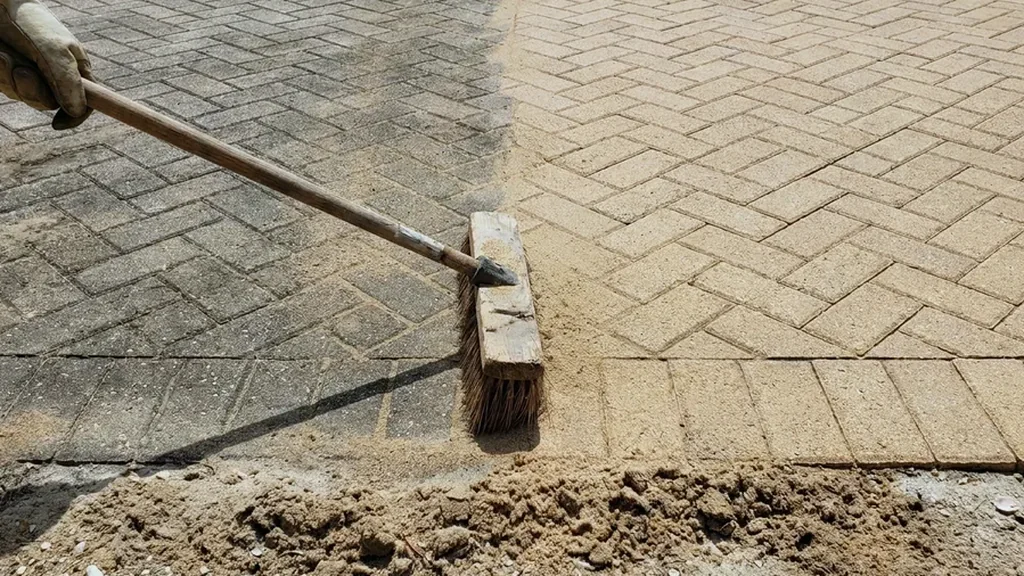
What paver problems show up most in Arlington Hills?
Tires that turn on the same spot
A Jacksonville paver sealing company says turning tires loosen joint sand and let pavers creep and settle. Arlington was built as Jacksonville's first major post-war suburb for the automobile, which makes driveways the heart of each lot. A dip where you park or back out is the likeliest trouble spot. It gets repaired before sealing, because sealer would hold the dip in place. A fix after the fact means stripping and starting over, so it is cheaper to do it in order. Mention where you usually park, and the contractor will look there first.
Roots lifting a corner
The same company says a section lifted by tree roots is repaired before sealing. Arlington Hills homes were built from 1951 to 1990, so the trees beside them have had time to grow. Lifted pavers also catch toes and tire edges, which turns a cosmetic issue into a safety one. If one corner sits higher than the rest, point it out at the first visit. Roots keep growing, so the contractor may also suggest a plan for what to watch next year.
River air with a bit of salt
The St. Johns River from downtown Jacksonville to Mayport is estuarine, and the water gets saltier past downtown. Storms can push ocean water upriver. Arlington Lions Club Park lies along the river in this ZIP, so the water is part of local life. Damp air carries moisture to shaded pavers, where algae grows faster, the Royal Horticultural Society says.
Sand that leaves the joints
Soil here follows the county pattern. The USDA's Ortega series is fine sand over 80 inches deep that drains fast, so loose joint sand leaves with the water. Rain totals about 52 inches a year, and most of it comes as short, heavy summer downpours. Per a trade article, joints that lose sand grow wider, admit soil and give weeds a foothold. The same article says joints low on sand should be topped up and swept clean. A Jacksonville company adds that ants need loose sand. Full, firm joints give them nothing to dig, which means fewer small mounds along the walk.
Layers of old sealer
Many of these homes are more than 30 years old, and driveways get redone. A Jacksonville sealing company says sealer that turns milky, white or flaky usually means trapped moisture or too many coats stacked over the years. That failed sealer is stripped before resealing. A water-based sealer will not go over a solvent-based one either, so the contractor checks. If you remember who sealed the driveway or when, share it at the estimate.
Which Arlington Hills streets have the oldest driveways?
Older driveways are likely on the streets from the first building years, since the neighborhood dates to 1954 and homes were built from 1951 to 1990. A neighborhood listing page names Layton Road, Cesery Boulevard, Gaillardia Road, Caladium Road, Ligustrum Road, Mayapple Road, Shetland Road and Lansdowne Drive. Tell the contractor your street and your best guess at the house's age when you book a free estimate, which helps them plan for how many coats may sit on the pavers.
Homes here run from about 925 to 2,350 square feet, with two to five bedrooms, in single-family and attached styles. A small attached patio and a wide single-family drive do not price alike, and a Jacksonville paver page notes that small patios can run into company minimum job sizes. Bundling jobs can lower the rate per foot. Call (904) 593-3709 and describe both, and the contractor can say whether to bundle them.
Some Arlington Hills streets may have an association, and some may not. Florida Statute 720.3035 caps what a board can review at the terms of its own declaration or guidelines. Read yours before you choose a finish, then book a free estimate. A natural-look sealer is the simpler route when the rules are unclear, and it keeps the pavers close to their original color.
What does paver sealing cost in Arlington Hills?
The figure most Northeast Florida companies publish is $1.75 to $3.25 per square foot, covering cleaning, joint sand and sealer. In Arlington Hills, a driveway with a repair or two and a failed old coat sits higher in that range. A Jacksonville cost guide notes that a small job costs more per foot, because prep time stays about the same as for a bigger one. For a number on your pavers, book a free estimate.
People often ask why paver sealing costs so much. Prep eats about two to three hours for every hour of sealing, one Jacksonville company says. The same cost guide says pavers behind a locked gate, up stairs or in a tight side yard add prep time. Call (904) 593-3709 and the contractor can tell you which of those apply to your property.
| Paved area | Typical example | Clean, sand and seal |
|---|---|---|
| 300 sq ft | Small patio or walkway | $525 to $975 |
| 600 sq ft | Two car driveway | $1,050 to $1,950 |
| 1,000 sq ft | Large driveway or pool deck | $1,750 to $3,250 |
| 1,500 sq ft | Driveway plus pool deck | $2,625 to $4,875 |
Math based on the $1.75 to $3.25 per square foot that Northeast Florida paver companies publish. Your contractor sets the actual price after seeing the surface. Repairs, leveling and stripping failed sealer are usually extra.
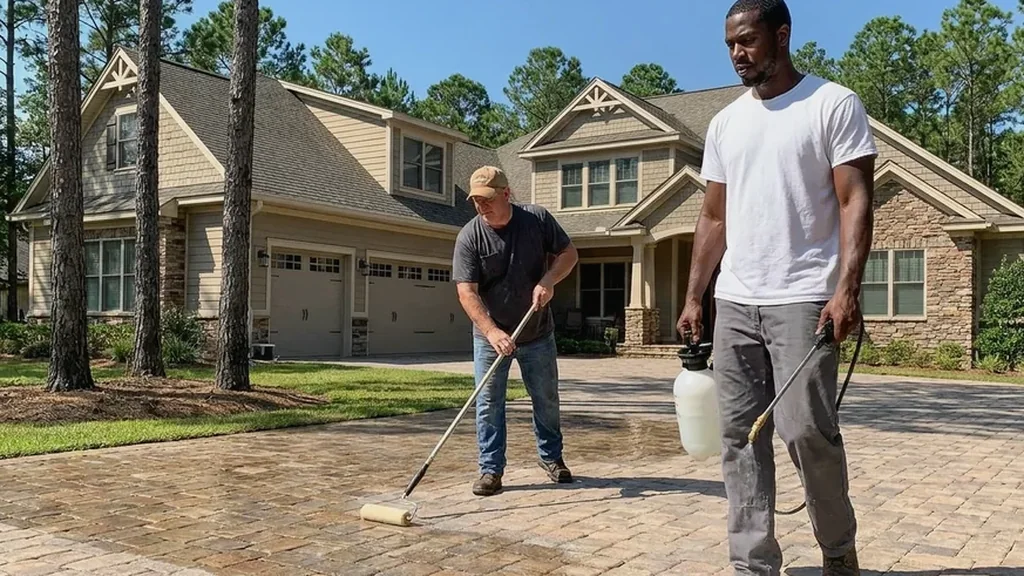
How does a paver sealing job work in Arlington Hills?
Check for dips, lifts and old coats
The contractor looks at where the tires turn, where roots may be pushing up, and what finish is already on the surface. Low and lifted areas are reset before sealing, with the base and edging checked as needed. Old failing sealer may need stripping, and that is priced in before work starts. Tell the contractor if you have noticed one corner moving or a joint that keeps opening. Photos from your phone help.
Wash the surface
Cleaning lifts algae, dirt and oil, and any rust marks are treated before the next step. River air keeps shaded walks damp, so green film often needs more attention there than on the open drive. The pressure is matched to the pavers so the joints stay intact, because harsh washing can strip sand and roughen the surface.
Refill the joints with silica sand
A Jacksonville company says joints are refilled with silica sand before sealing. Washing pulls sand out, and ants need loose sand to dig, so full joints help. The sand also keeps neighboring pavers from rocking against each other. The sand is swept clean off the face of the pavers. Matching the color gives a tidy finished look, and low-contrast sand makes the surface look clean and solid.
Wait for fully dry pavers
A Jacksonville paver page waits until pavers are bone dry, which it puts at 24 to 48 hours after cleaning. Nearly every complaint about white sealer traces to damp pavers or too thick a coat, one company says, so patience here pays off. Summer storms can add a day, and a careful contractor will simply move the visit. Spring and fall often give steadier weather.
Spray and back-roll the sealer
Pure rolling risks lap marks, a Jacksonville paver company says, so crews spray first and back-roll afterward. Matte keeps the natural look, while a wet look deepens color but shows scuffs sooner, so think about the spot where tires turn. Plan on walking on it within hours but keeping cars off for roughly 24. Pets and kids should stay off the pavers while the coat sets. Plan to park on the street that night, and tell visitors to use the curb.
Complete paver services in Arlington Hills
A job here runs in this order: check, wash, re-sand, dry, seal. Skipping the check locks in a sunken spot, and rushing the dry time causes a cloudy finish. Each stage has its own timing, and a contractor can lay it out for your lot. To hear that plan, call (904) 593-3709.
Driveways, front walks and back patios wear in separate ways. The drive takes tires, oil and sun. The walk takes feet and the shade of the front trees, and the patio holds water longest, especially when a screen or roof shades it. Say which you have when you book a free estimate, and each surface gets the right prep.
For sealer, a trade supplier splits the choice into film-forming acrylics that sit on top and penetrating products that soak in. Film-formers stabilize joint sand, and penetrating ones leave the look unchanged. Matte or wet look is the other choice. Call (904) 593-3709 to talk through what fits a 1950s to 1980s home.
Timing follows the rain, since most of Jacksonville's 52 inches falls from May to September. November through April is drier, and a job in that stretch is easier to schedule, while July storms can arrive without much warning. For a date with room to move, book a free estimate.
Questions to ask before you hire
- How long should I wait before driving or parking on the sealed surface?
- What happens to the white powder on my pavers before the sealer goes on?
- Will you need my outdoor water spigot, or do you bring your own water?
- What is on the paperwork if the estimate changes once you see the old sealer up close?
- If rain moves the job, how do I find out and when is the new day?
- How hard do you spray, so the joints and the paver surface are not damaged?
- Will you cover my pool cage screens and the plants along the walkway?
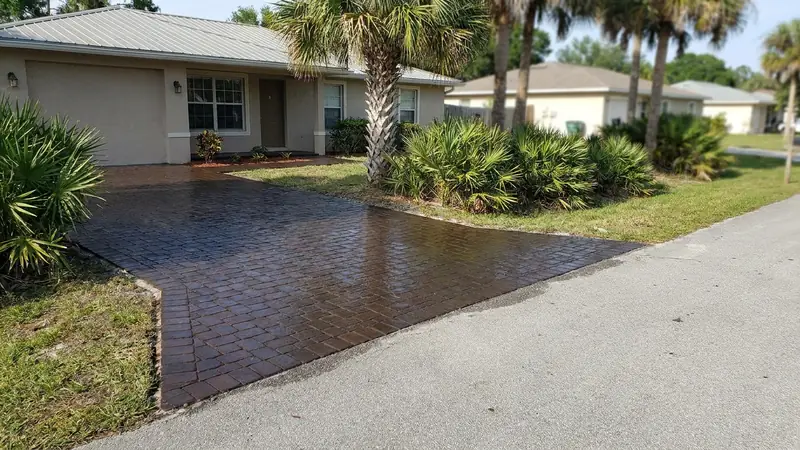
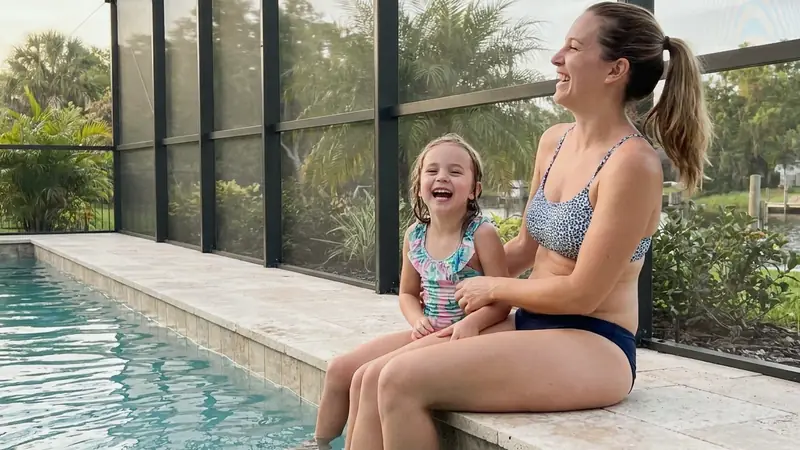
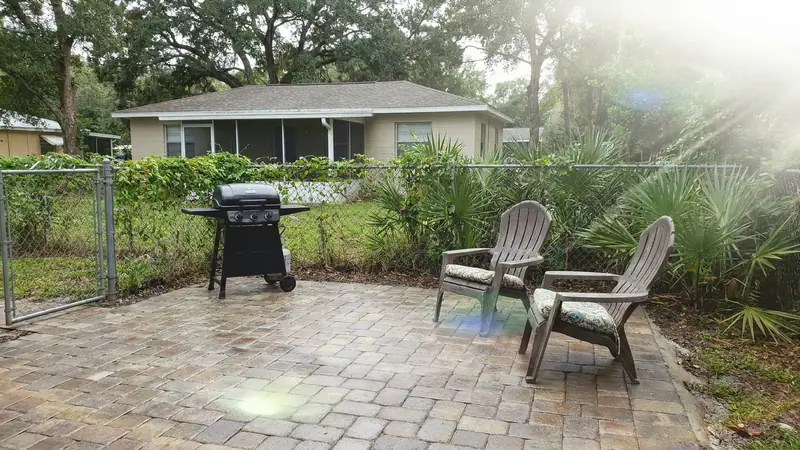
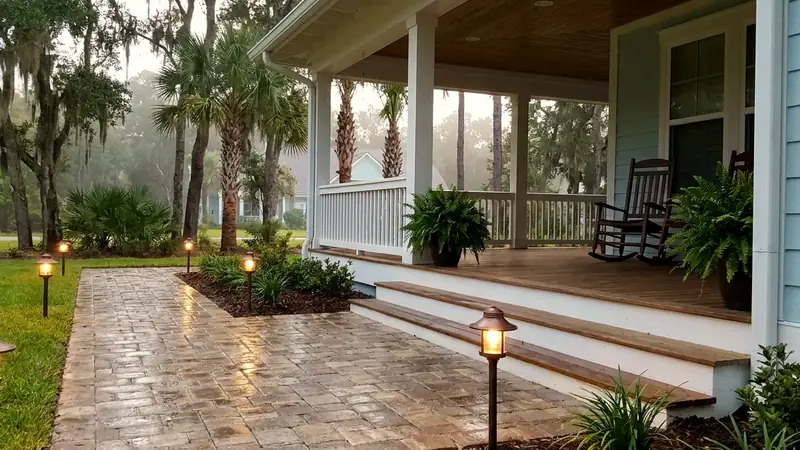
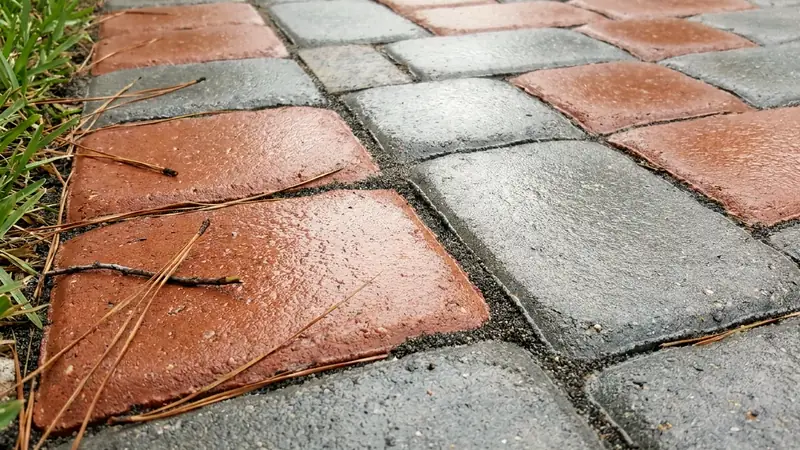
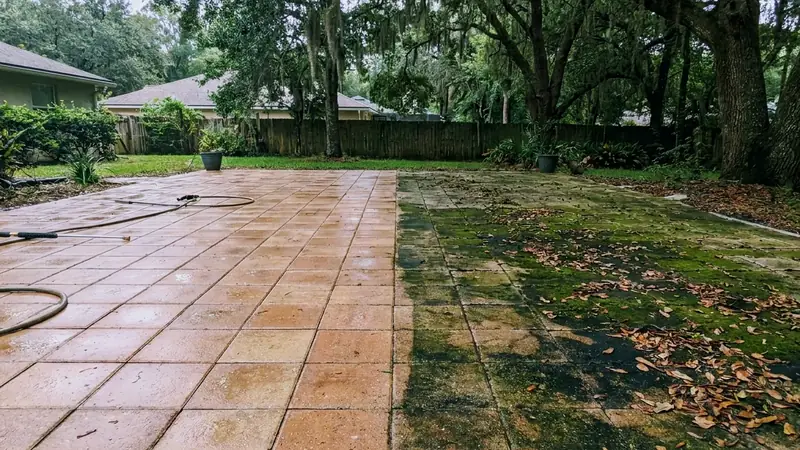
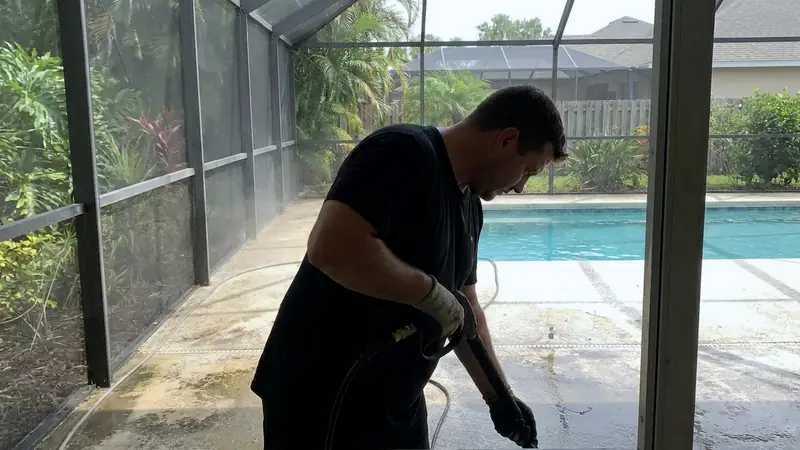
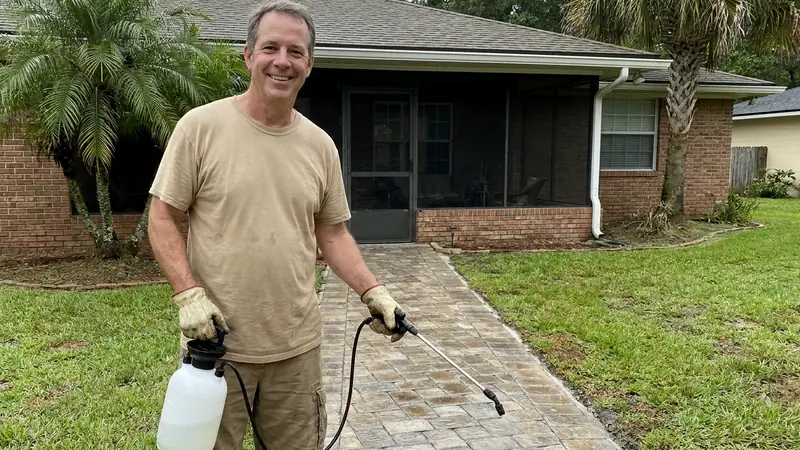
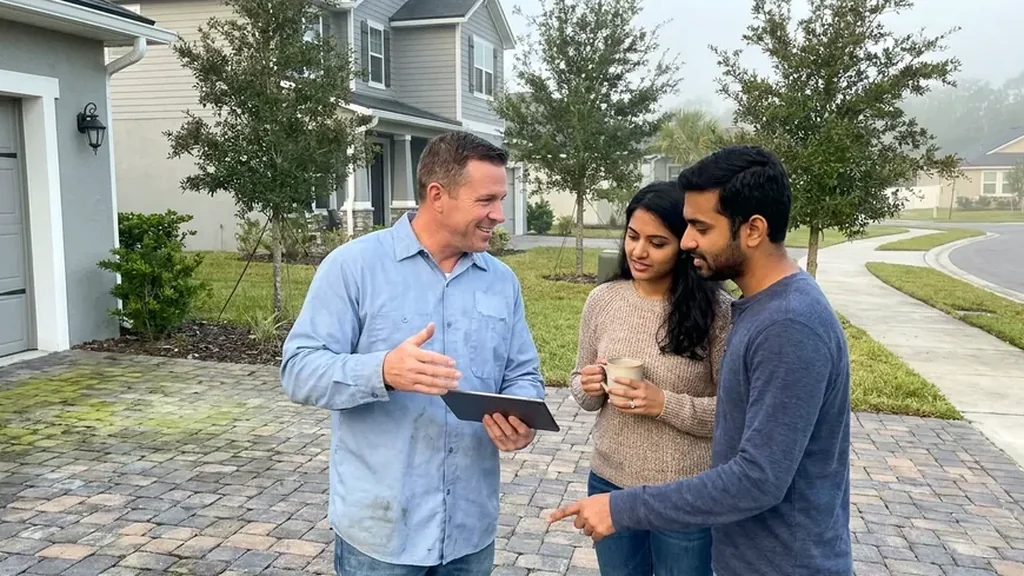
What do sealed pavers look like around Arlington Hills?
Why local matters in Arlington Hills
A contractor who works Arlington knows its suburban layout of car-oriented streets and older lots. That tells them where to look first for settling and lifted corners. A crew from across the river may spend the first hour finding that out, which is time you pay for. To speak with a contractor who works Arlington, call (904) 593-3709.
River air matters for timing. The St. Johns near Jacksonville is open to the ocean, and tides surge far upstream, which can slow drying on shaded pavers. A local contractor allows for that and does not rush the dry time, so the coat bonds the way it should. You can book a free estimate and ask how the schedule is set.
Local knowledge also covers how these houses were built. Arlington is known for mid-century modern architecture, and homes here run from about 925 to 2,350 square feet. Small patios and modest drives are likely on some lots. If yours is one, book a free estimate and ask whether a minimum job size applies.
What is the story behind Arlington Hills?
Arlington became part of the city in 1968 through consolidation, and The Jaxson calls it Jacksonville's first major post-war suburb built for the automobile. Terry Parker started buying land in the area around 1943 and held 1,800 acres by 1959. In 1955 he gave thirty acres to the school board for a high school, which took his name. If you live near Terry Parker High School, book a free estimate.
Arlington Lions Club Park, at 4322 Richard Denby Gatlin Road, lies along the St. Johns River. The city developed it in three phases from 1982 to 1989, and a boardwalk joins it to Blue Cypress Park. Blue Cypress Park was once an 18-hole golf course, and the city bought the land in June 1994. If you live close to either park, phone (904) 593-3709 and give your street name.
Frequently Asked Questions
What is the average cost to seal pavers in Arlington Hills?
The usual published price for a full clean, sand and seal is $1.75 to $3.25 per square foot in Northeast Florida. Repairs, failed old sealer and small jobs push a quote up. Ask for each surface and its area, so you can compare bids line by line.
How much does it cost to seal outdoor pavers per square foot?
Companies here post $1.75 to $3.25 per square foot for the whole clean, sand and seal. Smaller projects cost more per foot, a Jacksonville cost guide says, since prep stays the same. A patio and drive priced together may come out lower per foot, since setup happens once. Ask the contractor to show both ways.
Is it good to seal pavers in Florida for a busy driveway?
Yes. Sealing slows fading and stains and holds the joint sand. Unsealed concrete pavers fade in the Jacksonville sun within 3 to 5 years, one company says. Sealing also holds joint sand, which helps against weeds and ants. It does not stop wear from tires, so busy driveways still need a fresh coat on schedule.
How long do paver sealers last in Arlington Hills?
Two to five years between coats is what companies commonly say. A Jacksonville company puts full-sun driveways at about 18 to 24 months and shaded walks at 24 to 36. Water that stops beading and soaks in quickly is a sign it is time. Tire-turn spots on a driveway may wear first.
Why is paver sealing so expensive?
Most of the price is prep work. A Jacksonville company says it spends two to three hours of prep for every hour of sealing. Stripping old sealer and refilling joints add time. A job that needs both costs more than a simple wash and coat.
Should sunken pavers be fixed before sealing?
Yes. A Jacksonville company says sealing locks in the surface as it is, so sunken or lifted sections are reset first. Tell the contractor about low spots where you park, and mark them if you can.
Can sealer go over my old coat?
Not always, since water-based sealer cannot go over solvent-based. The contractor identifies the old product first. Milky or flaking sealer is stripped before the new coat, which adds time and cost, so ask about it up front.
How long should I stay off the pavers after sealing?
Walking on the pavers is generally safe a few hours after the coat goes on. A Jacksonville company says cars need 24 hours, so plan where they will sit overnight after the job. Ask the contractor for the number tied to the product, since weather can change it.
Does river air affect sealing in Arlington Hills?
It can slow drying, so allow extra time. The St. Johns near Jacksonville is an estuary open to the ocean, so air can stay humid. Sealer needs a fully dry surface, typically 24 to 48 hours after cleaning.
Nearby areas we serve
Ready for a Free Estimate in Arlington Hills?
Call (904) 593-3709 and tell us about your pavers.
Free, no obligation